
2024 ARMADA DECLIVITY 108 TI SKIS
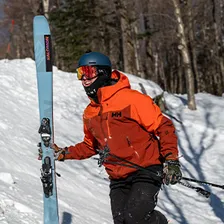
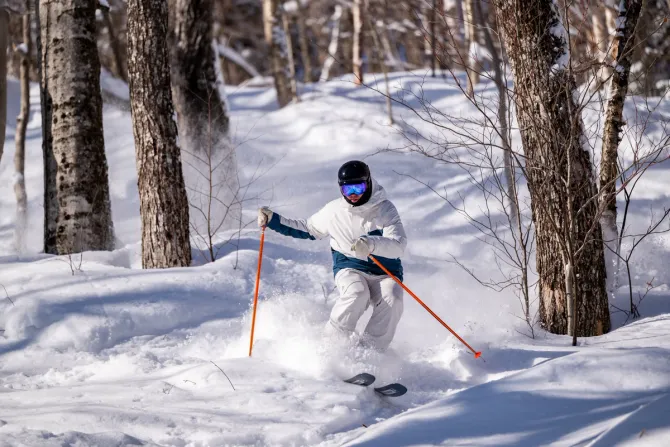
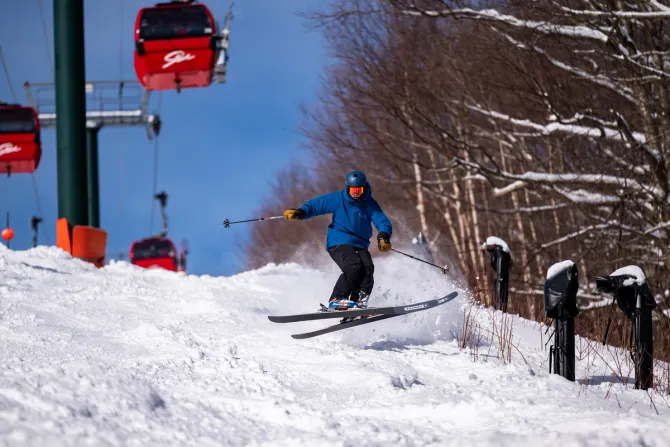
As one of the wider Declivities, the 108 Ti is an absolute dream to ski. It takes cues from the other skis in the line, but adds a whole new dimension with longer lengths and added rocker and taper. This is a wide-zone cruiser that’s built for high-speeds and long turns. While we love it here at Stowe, especially when the trails are empty and somewhat soft, it seems as though we’remissing out on some bigger terrain and more adventurous zones. That said, it’s still a complete and total blast to ski, as it feels like there’s almost nothing under you—that's how smooth they are. This 108 aligns more with what Armada seems to be as a company. This ski plays off of the more freestyle-oriented skis in the line, offering a high-octane, hard charging, ripping ski that is allows the more creative skiers out there the opportunitiy to point and shoot down some of the most technical lines and wide-open spaces. It’s a pretty big difference when compared to a twin tip of similar width, say the ARV 106. This Declivity 108 Ti is a big-mountain stick that makes everything else seem so much smaller.
As a high-powered ski in the Declivity line, we see a slightly different build than in the narrower offerings. We still get a caruba wood core and two titanal laminates. We still get a full AR 100 sidewall, but we add carbon stringers to the mix. This works great as when skis get wider, they can lose some of their stiffness and responsiveness. Carbon helps keep this ski on pace with the narrower versions by stiffening up the surface area and delivering a greater amount of precision and power to the setup. The upper laminate of metal features slits that are milled out of the layer, taking a smidge off the top when it comes to burly stability and power. That metal is replaced by an elastomer material that aids in the articulation and damping process of the ski’s shovel. When you tip the ski on edge, it pulls you into the turn with ease and silence, creating a vibration-free front half of the turn. The rest of the ski is all business, so there’s no need to worry about having too soft a tail, or even a less-torsionally stiff underfoot zone—this ski is all there. By pairing the light weight caruba wood core with two thin sheets of metal, we see a weight of 1975 grams in the 182, or just over 2000 in the 190.
| Length | Radius | Sidecut |
|---|---|---|
| 182, 190 cm | 21.7 m at 182 cm | 136/108/126 mm |
| Preferred Terrain |
|---|
| Powder |
| Crud |
| Big Mountain |
| Construction |
|---|
| Caruba |
| Articulated Titanal Banding |
| Carbon Stringers |
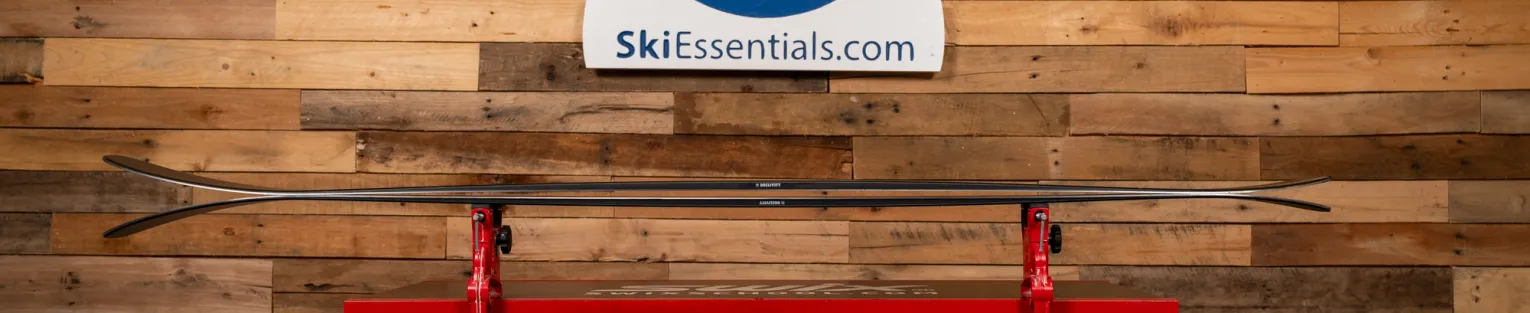
The main thing that sticks out about the shape and profile is the massive shovel taper. This ski is designed specifically for softer snow and smooth turning. There’s a long, low rocker profile that accentuates the dramatic taper, and this allows for prime flotation and premium stability in fresh snow. There’s still camber underfoot, and this combines well with the full sidewall and sturdy build to create a fair amount of energy for a ski this wide. It’s not like it rebounds you sharply out of a turn, rather, it allows the skier to gain confidence in a carved turn, whether in full powder, crud, chop, or even softer corduroy. Through the tail, this ski gets more directional rocker than the more twin-tipped offerings from Armada, and this allows the ski to carve clean and straight through adverse conditions and terrain. In technical zones, the camber underfoot pairs well with the tail to create a ski that can hold well on very steep areas, as well as allowing skiers to open it up and let it run. Both sizes create about a 22-meter turn radius, and this is a very appropriate shape for the intention and application of the ski.
Skiers who spend most of their time in snowier zones could easily use this ski as a daily driver. It’s that much fun, and pretty darn versatile for all-mountain skiing, albeit a bit on the wide side. For people who ski in less snowy areas, this will serve as a powder day ski, but it’d be difficult to argue that this would make a good one ski quiver here in Vermont. Either way, one of the limiting factors is the length options. You get a 182 or a 190, that’s it. This pigeon-holes this ski quite a bit, so be sure to take that into account prior to making any ski decisions, or even just doing initial research.