


The Kastle PX81 is an awesome choice for intermediate to advanced skiers who spend most of their time on the trail. With groomed surfaces as a highlight for this ski, the PX81 loves to be in a carved turn on the corduroy, but the slightly more flexible nature of the ski makes it appealing to slightly adventurous skiers and terrain as well. While nobody’s going to mistake this for a powder ski, the PX81 is lighter and has a larger Hollowtech 3.0 so that the skis are more maneuverable and stable. Built with a blend of poplar and beech in the wood core, the skis also get two stringers of carbon on the tops and bottoms, as well as fiberglass laminates to help with energy and pop. Standard camber underfoot certainly leans to the front side of the spectrum, providing excellent edge grip and energy for skiers who know how to load up a ski with power. In the 179, the skis generate a 16.7-meter turn radius, so they certainly prefer to be in a carved turn, and in that realm, they excel.

ROCKER PROFILE

Camber
CORE MATERIALS

Fiberglass
PREFERRED TERRAIN


Groomers, All Mountain
Devin Frye-O'Neill skied that 179, noting it skied true to size, and he bestowed top scores of 5 out of 5 for torsional stiffness, edge hold, and stability. As with specific skis like this, we also see lower scores. For Devin, this means 2’s out of 5 for flotation, playfulness, and forgiveness. His overall impression score was a 4, and he also doled out 3’s for quickness, maneuverability, and versatility. Devin notes that “This ski only wants open, hardpack runs. It skied great at the top of the mountain, got into mashed potatoes near the base and had to fight to make a turn.” It certainly sounds like the ski operates better in a groomed and smooth format for Devin, and that certainly makes sense given the shape and construction of the ski.
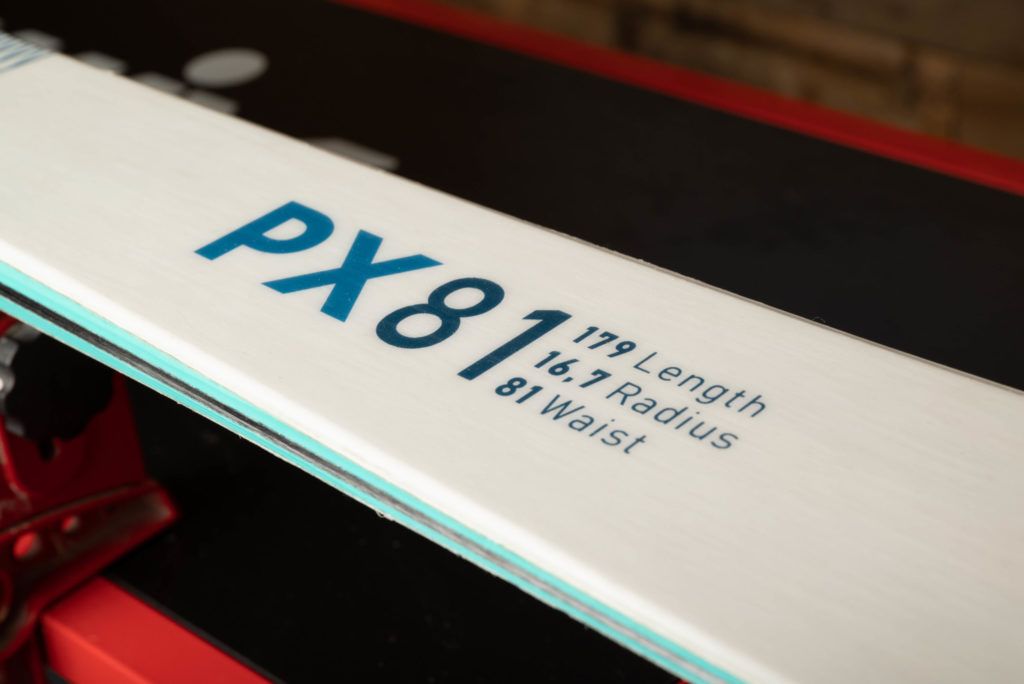

Also on the 179, Matt McGinnis found it skied true to size, and he had some high scores as well, with 5’s out of 5 going for overall impression, forgiveness, and playfulness. He gave 4’s for versatility, torsional stiffness, edge hold, quickness, maneuverability, and stability. Matt states: “Here’s a phrase I don’t get to use much anymore: full camber. Now, I don’t know if Kastle markets these skis as full camber or not, but either way, the length of camber on these skis is as long as you’ll find these days. The result is refreshing. While the px81 doesn’t have metal in it, the amount of camber it has makes up for that in a big way when it it comes to edge hold. It also makes these skis far more forgiving and easier to ski than a ski with metal has. This means the PX81 enables skiers to ski these things as confidently as if they had metal, without needing to hit top speeds to “activate” them. That makes them the perfect option for anyone from intermediate skiers looking to progress their skills, to advanced or even expert skiers who just want something that doesn’t demand their top performance on every run. Overall, I’m very impressed by how much performance Kastle packed into a ski without using metal.”
That lack of metal could be seen as a detriment to some, but is certainly an asset for a skier like Matt. He doesn’t have a racing background, but is a very solid skier, so he doesn’t need the metal, especially when the carbon and the camber take up a lot of that slack. For skiers looking to max out on energy and pop on the groomers, the Kastle PX81 should certainly be on the list.