
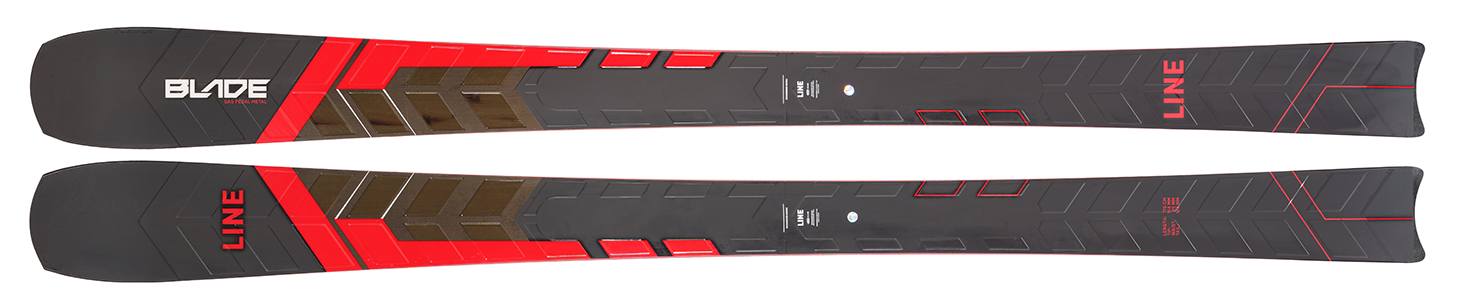

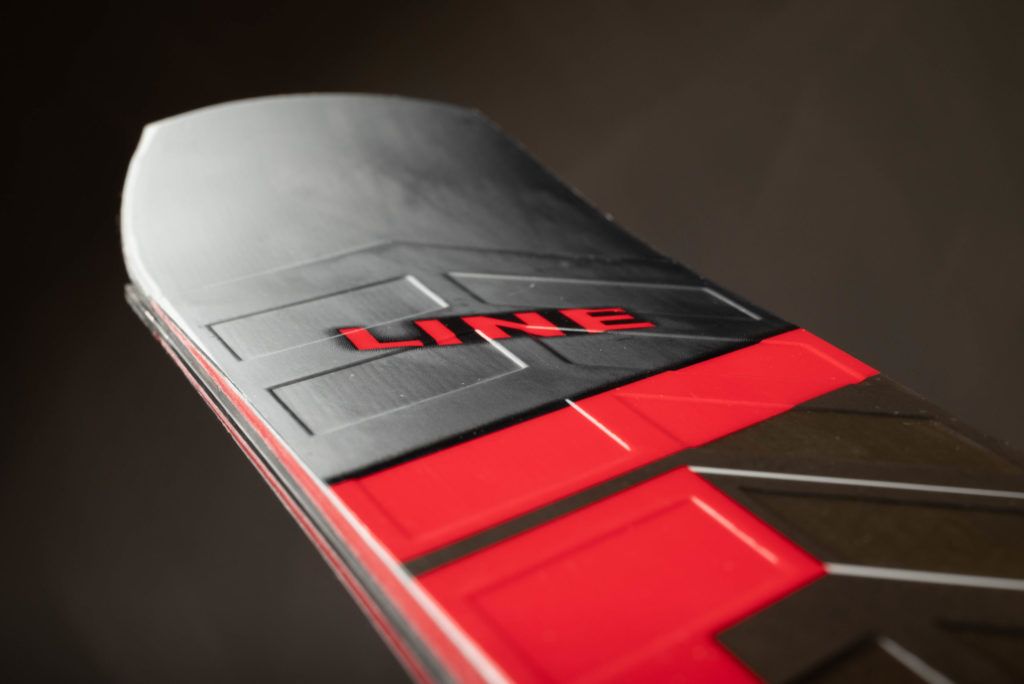
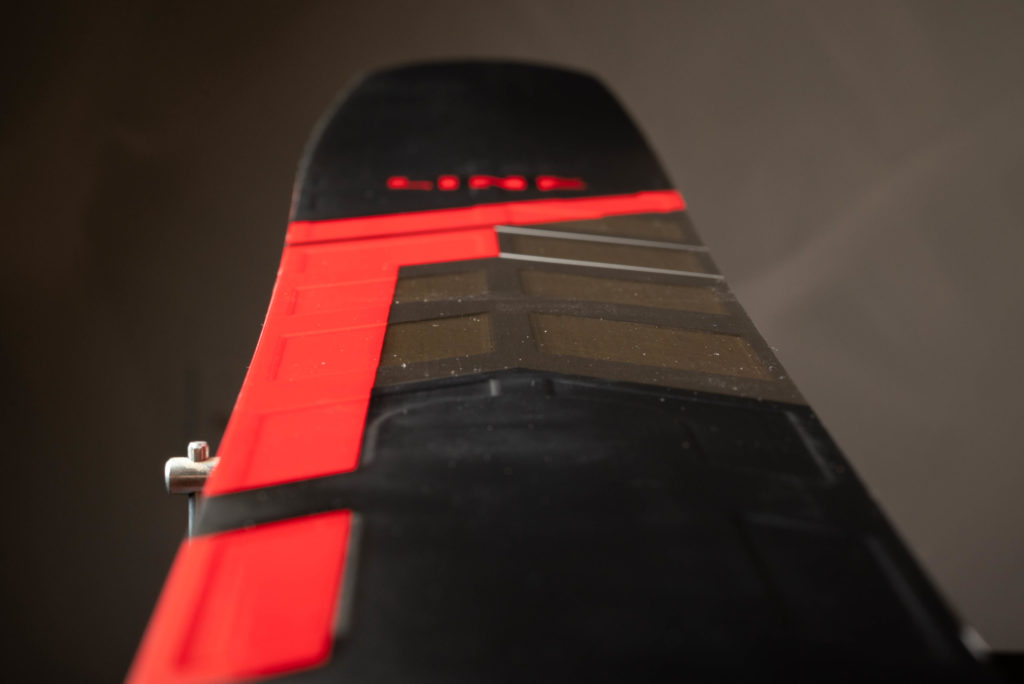
One of the strangest skis we’ve ever been on, the 2023 Line Blade gets a graphics update, but remains the same bizarre construction and shape that we’ve known for a few years. While we’re still not quite sure what this ski is, exactly, one of the things we’ve noticed is that there’s a whole lot of interest and intrigue about it. With one of the oddest shapes for skis we’ve seen, the Blade features a 154 mm tip, a 95 mm waist, and a 124 mm tail. The skis produce a “tight” turn radius as described in Line’s literature. It feels like about a 15-meter arc to us, but can certainly vary depending on the measure of your edge angle. Built with an Aspen wood core, the skis also get Line’s Gas Pedal Metal laminate. This partial metal sheet provides enough torsional stiffness to get the ski up and on edge without adding too much weight for a full layer. Even so, this ski comes in at 2050 grams per ski, which at a 176 cm length is on the heavier side, but it makes sense given the shorter turn shape. While not a twin tip in the freestyle/park sense of the term, there’s some decent splay back there that allows for creative skiing to go along with the crazy sidecut aspect.
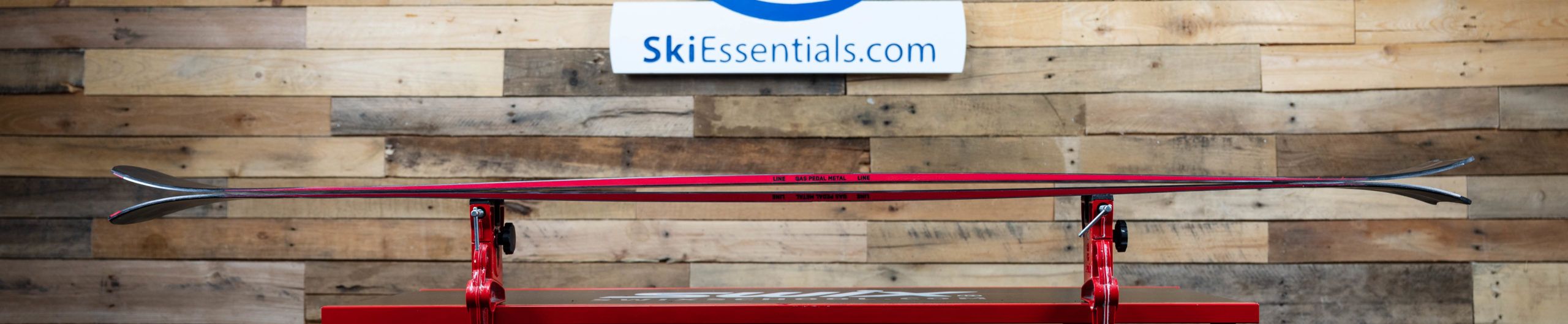
ROCKER PROFILE

Rocker / Camber / Rocker
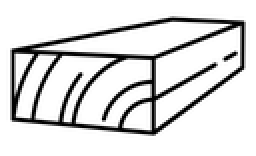
CORE MATERIALS

5-Cut Multi Radius
PREFERRED TERRAIN


All Mountain, Groomers
On the 176, Bob St.Pierre noted that it “was fine, I guess. I certainly want to try the 181, but it’s really hard to tell if one length is better/worse/truer than another. Very interesting experience overall.” Bob scored the ski top marks of 5 out of 5 for overall impression, playfulness, and forgiveness. He gave it lower scores of 3 for versatility, quickness, maneuverability, and flotation. “This is a tough ski to score, as it has a totally and completely unique feel and performance from anything else. In all seriousness, my biggest recommendation is to ski it without poles. When I followed Ryan Daniel with my camera this year, I offered to hold his poles while he skied the Blade, and he did so much better. The skis perform a bit closer to intended when you view them through a playful lens, rather than a business one. Ryan has a very strong racing background so he wanted to treat them like race skis, but they’re not. When the timing of the poles was removed, he started to look like a totally different skier—able to make a variety of turn shapes and styles versus one type of carved turn. The Blade looks a lot better, and feels that way too, when you don’t have poles because they add rigidity to the style and fluidity of the ski.” Interesting take there.



Quenten Jones was also on the 176, noting that it “felt true to size, but I’m curious about the next longer length.” Eerily similar to Bob’s take on the length. Quenten scored the ski top scores of 5 out of 5 for quickness, maneuverability, and playfulness, with 4’s for stability, forgiveness, and overall impression. He calls the Blade a “Fun snappy carver that can also do big sweeping turns. The big tip engages early and pulls you into the turn. Edge hold was better than expected.” True about the big tip taking the ski into the turn for sure. The metal does matter in this ski, as it brings the torsional stiffness to the forefront of the equation.
While it’s on the difficult side to categorize, the main attraction here is the fun-factor involved in skiing the Blade. It’s better if we try not to define it, rather, just enjoy it for what it is and keep the thing on edge. It makes crazy turns, and has some interesting versatility to it as well. Ditch the poles and see the difference it makes.