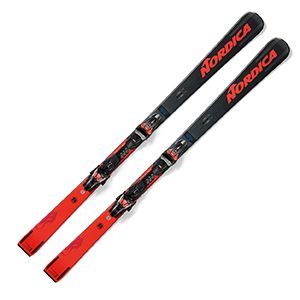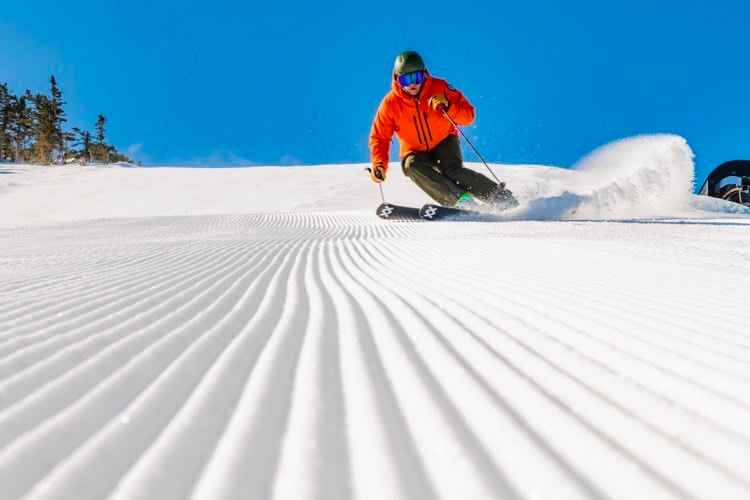



The 2023 Nordica Dobermann Spitfire 80 is an awesome choice for front side rippers who are looking for a wider platform to stand on. We’re a bit disappointed, mainly because they used to offer this ski as flat, in addition to the recoil power plate system that it comes with exclusively now. The flat ski, in this width, offered skiers the ability to put a lower stand height binding on it to access a more all-mountain presence but in a race-room build. Sadly, it seemed like we were the only ones that felt that way, so we’re back to the system-only! Oh well. In any case, the ski still rips.

ROCKER PROFILE

Camber
CORE MATERIALS

Carbon Race Bridge 2.0
PREFERRED TERRAIN


Groomers, All Mountain
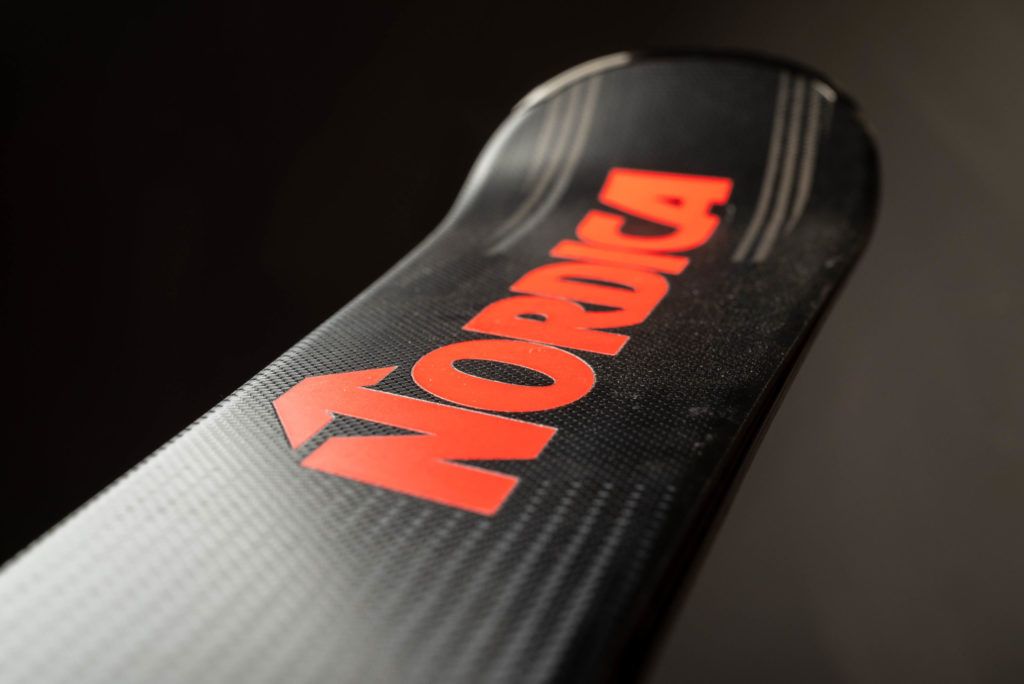
Built with Nordica’s Performance wood core, two sheets of metal, Carbon Race Bridge, Phenol Sidewalls, and a GR 400 Carbon laminate, these skis are stiff, strong, stable, and damp. All the while, you do not lose any performance due to the build, mainly because of the torsional stiffness and energetic wood core. The sidewalls are harder than normal ABS material, and having the carbon laminate and race bridge makes the ski snappy and poppy while not weighing an absolute ton on your feet. Two sheets of metal works great in any race-style ski, and we love the feeling of stability and dampness—not a whole lot of vibrations going on in this ski at all. At 80 mm wide underfoot, the 174 produces a 16-meter turn radius, and it’s surrounded by a 130 mm tip and a 110 mm tail, so overall, these things have quite a bit of surface area to them, making the Spitfire 80 quite a bit more versatile than the narrower 72 and 76 in the Spitfire lineup. While it comes up short in the all-mountain department, it does make a difference, especially over the 72.


Nate Gardner is an upper-level PSIA participant, so it’s great to get his technical knowledge and experience when it comes to precise and powerful skis like the Spitfire 80. Nate tested the 174, and noted that it felt a bit short in order to access all turn sizes, so that 16-meter arc didn’t quite work great for Nate in the 174. Bumping up to the 180 gets you an extra meter in the turn, as well as additional material to make it more stable in the carve. Nate scored the ski 5’s out of 5 for quickness, maneuverability, torsional stiffness, and edge hold, with 4’s running the rest of the table. For a front-side ski, these are some consistently high scores, showing Nate felt they were more well-rounded than the shape and build may let on. Nate notes: “I would have preferred a longer length, but if you want to ski edge to edge it does the job well. Good grip for a wide ski.” It’s kind of funny that he’s considering 80 mm to be wide, but for a front side ski with a race-room build, I suppose that could be accurate.
While I personally miss the potential of the flat Spitfire 80, the system still works really well for advanced and expert skiers who are looking for a slightly wider build while retaining race-like status. Great for groomers, but with some versatility built in for all-mountain adventures, the Nordica Dobermann Spitfire 80 can be quite a few things to a variety of strong skiers.