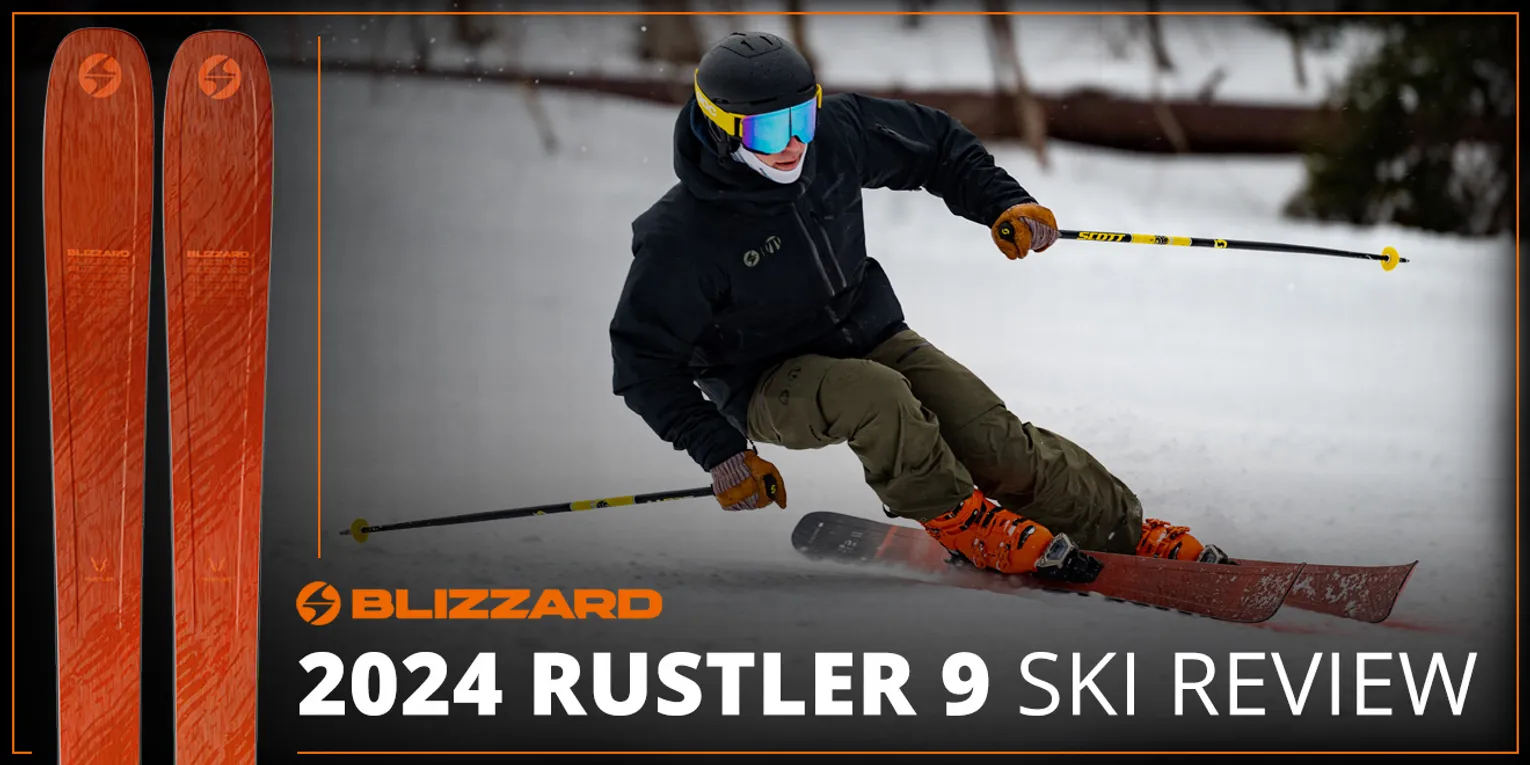
2024 BLIZZARD RUSTLER 9 SKI REVIEW
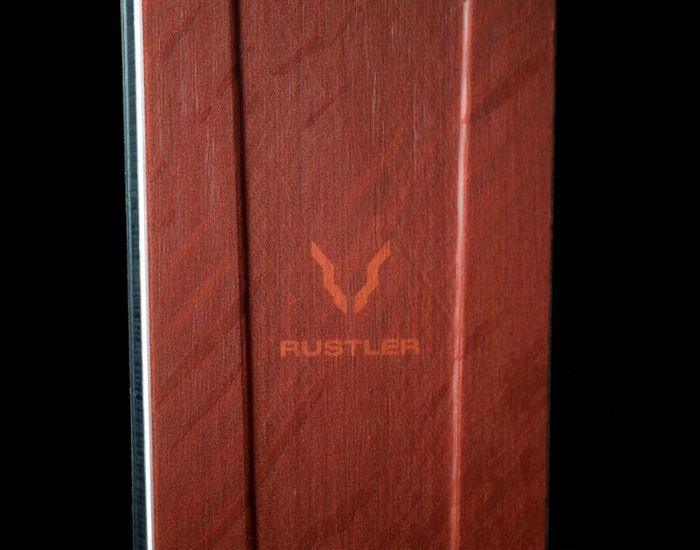
The Blizzard Rustler series has been around for quite some time, and it’s about time that they get a refresh. For this review, specifically, we’re focusing on the 9, which changes more, relatively speaking, than the 10 or the 11. For years, the Rustler 9 has been one of the most versatile, automatic, and go-to models of the all-mountain world. This application has not changed, rather it’s become more sophisticated—leaning slightly more to the freeride side of the spectrum. While it’s a pretty wholesale change to the ski, from design, shape, construction, and profile perspectives, it still manages to fit into that slot of being super-versatile, insanely fun, and totally rewarding.
As with most skis, it all starts with the core. For years, Blizzard relied on a mixed wood core in the Rustler series, and it worked great, but now that they’ve had TrueBlend in the works with their other all-mountain and freeride skis for a few seasons, it was time to apply that technology to the flagship Rustler series. We saw it come through last year with Hustle, and the Rustler 9 uses that exact same wood core. They call it Freeride TrueBlend, and it’s a great mix of light weight, energetic feel, and poppy playfulness. The “blend” of the wood consists of 8 beech stringers, 5 paulownia, and 3 poplar. The fact that Blizzard is able to fine-tune the flex and behavior of each model, as well as in each length, makes a huge difference when it comes to accessing different characteristics of the ski. For Rustler 9, this means that the engineers can counteract heavier materials like metal with lighter ones such as paulownia to create an even and balanced feel and flex.
AT A GLANCE
|
|
2024 Blizzard Rustler 9 Skis |
|

AVAILABLE SIZES |
TURN RADIUS |
SIDECUT |
WEIGHT |
PRICE |
|---|---|---|---|---|
150, 156, 162, 168, 174 cm |
16 m @ 174 cm |
129 / 96 / 118.5 mm |
1,735 g @ 164 cm |
$749.95 |
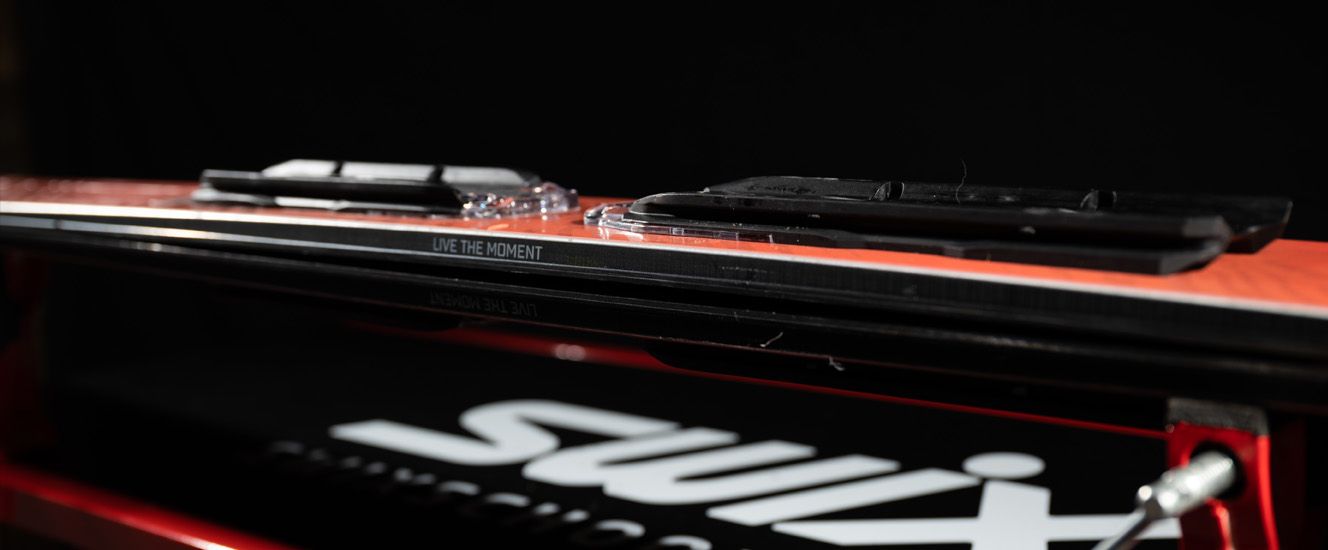
FluxForm Technology is the next big buzzword here, and basically this is what they call the shape of the metal laminate in the ski. Starting with a plate underfoot, it’s not too dissimilar from what we see in the previous version of the Rustler 9, but it ends there. While before, we saw a gradual tapering to the center of the ski with that metal laminate, for 2024 we see more of a frame-style layer. There are two “forks” of metal that extend along the edges into the shovel of the ski, but they do not connect through the tip or tail. The theory here, and we can touch more about this when it comes to performance, is that this allows for smoother torsional flexion in the tips and tails while placing a premium on edge grip. While it can look like one layer of titanal shaped into this form, in reality it's three separate pieces. Two that run along the edges, then the third as the plate underfoot. The combination of the TrueBlend wood core and the FluxForm metal laminate creates a weight of 1935 grams per ski in the 180. Along the lines of length, we see a different breakdown for 2024, with sizing decreasing from 8cm gaps to 6cm. This allows for more personalized sizing and increases the broad appeal of this ski. Some skiers got lost between the 172, 180, and 188 splits, and now it becomes a more palatable 174, 180, and 186.
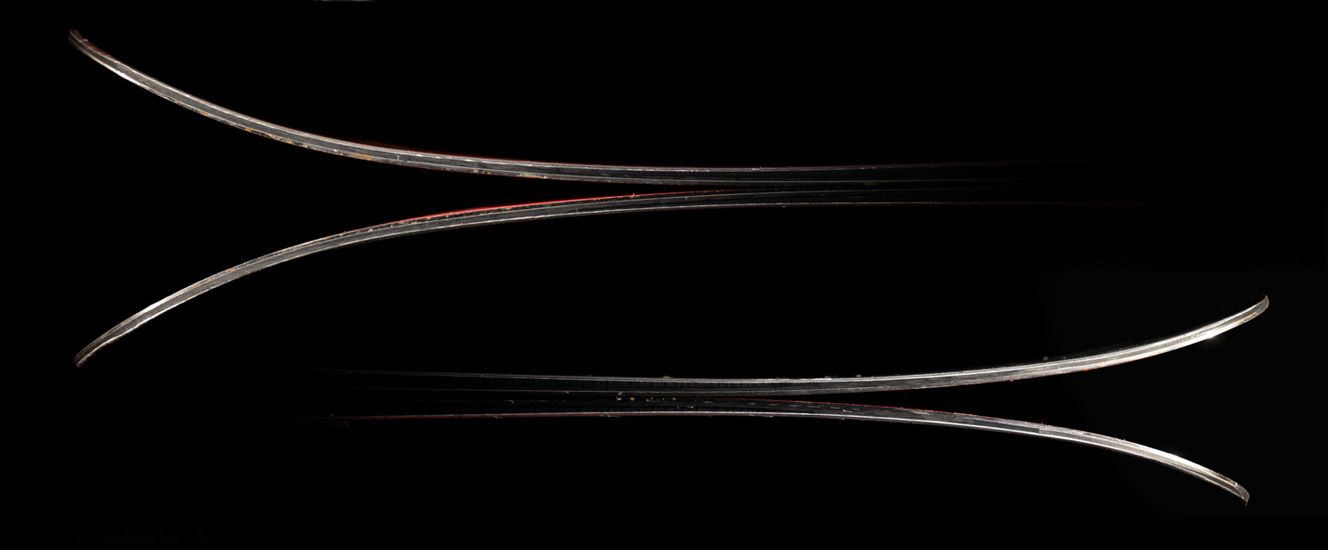
The Rustler 9 has always had a decent amount of splay in the tips and tails, and while we do see that trend carry forward, the rocker profile of the ski goes about it in a slightly different manner. The 2024 Rustler 9 has longer and lower rocker throughout the tips and tails, resulting in a slightly shorter effective edge and ultimately more splay in the ends of the ski. This is a nod to the freeride-ification of the Rustler, adding flotation and playfulness for when the snow gets deep. There’s still a fair amount of camber underfoot, as that interacts well with the metal laminate to keep the ski planted on the groomers when asked.
By adding a few millimeters of width to the overall footprint, the Rustler 9 now finds itself in the upper half of the 90’s at 96 mm in the middle. While we used to see either 92 or 94 mm depending on length, we now get a 96 through all lengths. The tips and tails increase slightly as well, so Blizzard keeps the 17-meter radius in the 180 while widening the ski overall. This, too, follows the trend of creating a more playful and floatier Rustler when it comes to shape and profile. Skiers who have been searching for something in the low 90’s may now have to look elsewhere to get their fix while others who have been clamoring for a wider Rustler 9 will now be granted their wish. Does this change take it a bit too close to the Rustler 10? Maybe. Does it leave more of a gap in Blizzard’s line when it comes to men’s skis under 96 mm that aren’t named Brahma? Perhaps. Either way, we prefer to view this ski in a vacuum, and in that sense, it certainly stands on its own as a wonderful mix of all-mountain performance and freeride flair.
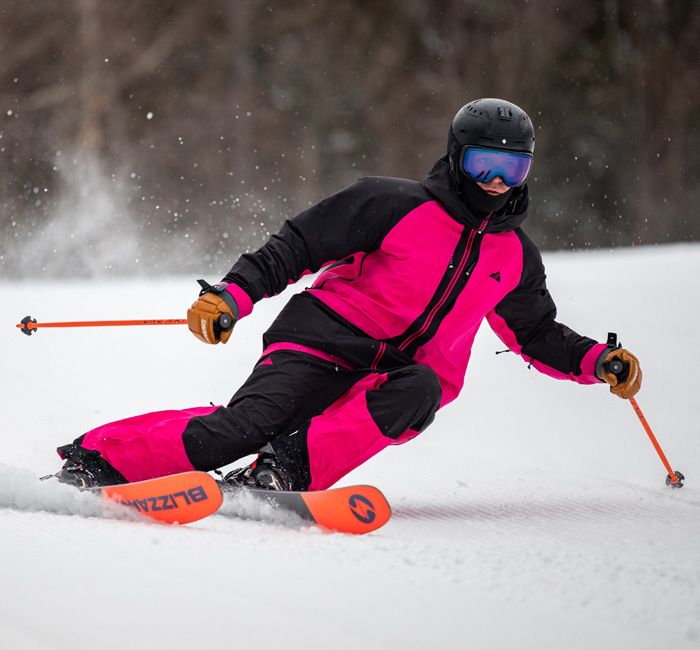
And that’ll bring us right to that performance. As a mid-90's ski, it should be able to do everything, and in that realm, the new Rustler 9 is a resounding success. Starting with groomer performance and carving turns, it’s pretty easy to see that the blend of its new wood core and properly tuned metal laminate works wonders when it comes to initiating, carving, and completing a turn. Not only that, but the flex of the ski marries quite well with torsional stiffness in the forebody and aft portions of the ski in terms of snow contact. Skiers of varying abilities will take enormous pleasure in driving the tip, standing on the middle, and accessing pure rebound out of the tail. The metal along the edges makes a lot of sense for this carving application, as we’ve seen it work very well for other framed skis such as Volkl’s Mantra and Kendo products. This one isn’t quite as demanding as those more intense skis, but you can still achieve a very high-level of edge control and carving performance. While we feel the flex of the “fork” in the front and back, it doesn’t make the ski feel soft by any stretch—there's still a whole lot of precision and power here. On super-firm snow and hard pack, it’s going to react like many skis in the mid-90's range do—there's some chatter here and there, but for the most part, it’s a very smooth and stable ski. Softer groomers is where this ski thrives, but it’s not like it’s a bad ski for firm snow and ice.
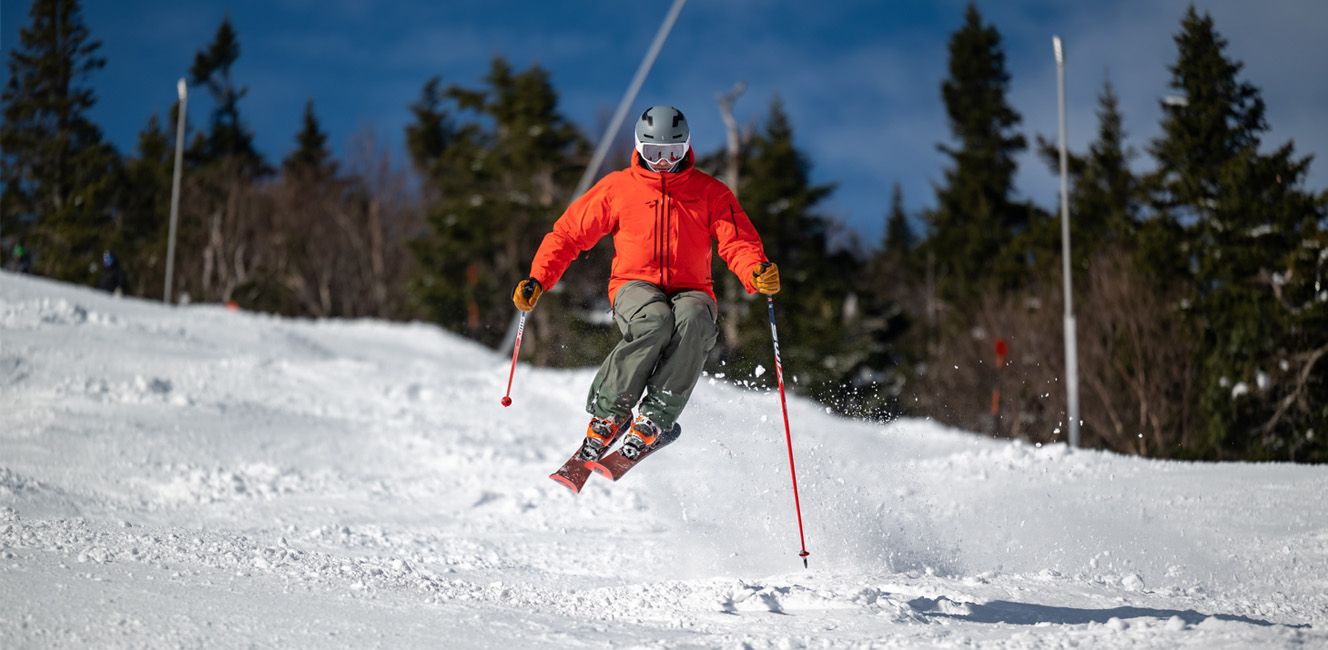
Off-piste, the Rustler 9 is an absolute treat to ski. It wiggles smoothly through the bumps, it dances through the trees, and it stays on top of a surprising amount of fresh snow. The round flex and the agile nature of the Rustler allow mogul enthusiasts to choose between sticking to a tight zipper line and making wider turns depending on conditions and terrain. For its width, it’s really quick, and the longer rocker allows for a clean and easy pivot when asked. This characteristic also applies to trees and powder. Making subsequent turns in tighter trees is a huge part of daily skiing here in Vermont, and the Rustler 9 is one of the best of its kind when it comes to forging a seamless path through the glades. The turned-up tail makes for easy transitions between turns, and it allows the skier to remain unweighted for a long period of time to create and maintain that maneuverability. At no point did we feel that the Rustler 9 was “too much” ski for tighter spaces and more technical terrain. One of my most favorite days on the Rustler 9 was a snow-to-rain event that normally turns out pretty bad for skiers. The snow turns to cement, and if you’re on something too narrow or too cambered, you’re going to have a bad time. On this super-dense snow, the Rustler stayed right on top, making smooth and smeary turns with grace and poise. While this wasn’t a particularly enjoyable day skiing in the rain, it was very nice to see that the Rustler was able to handle such adversity with aplomb.
As a twin-tip, the Rustler 9 should have some multi-dimensional capabilities as well, especially in terms of the freestyle world. It’s here that we’ll defer to Jeff and his experiences riding the Rustler in the park and skiing switch:

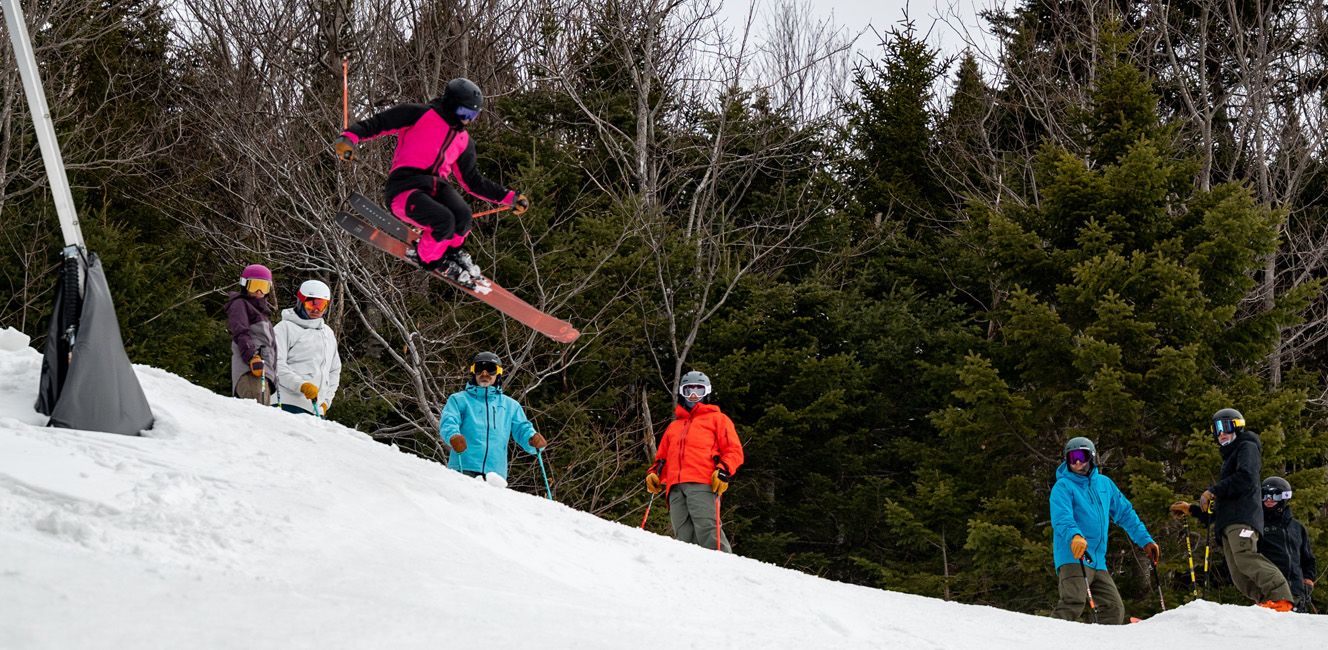
The Rustler 9 has always walked that line between being a directional ski or a twin tip ski. While it’s never excelled in the park, it has always had park capabilities. It was common for us to recommend the Rustler for anyone who described their skiing and goals as something along the lines of “I spend most of my time skiing all-mountain terrain, but want to learn some park tricks” or “I spend 90% of my time in the trees and 10% in the park.” It was never the best option for someone who emphasizes park skiing over all-mountain use, nor was it trying to be. As Bob points out, however, this new version has more rise, particularly in the tail. Does that make it more appropriate in the park? I was eager to find out.
Before we get into the thick of it, I thought it would be interesting to see if my thoughts and the feel I get from these new skis are supported by the data. Measuring the new ski, I found it to have 38 cm of tip rocker and 33 cm of tail rocker, with 10 cm of splay in the tail. The old Rustler 9 has 35 cm of tip rocker with 28 cm of tail rocker and 8 cm of tail splay. So, by the numbers, we get 5 extra cm of tail rocker in length and 2 extra cm in splay. There’s also now a 5 cm difference in tip and tail rocker length, compared to a 7 cm difference in the previous shape. So, yes, by the numbers, this ski has more tail rocker and also more of a balanced shape when comparing tip to tail dimensions. That basically ends with the amount of rocker, however. Both skis have a 10.5 mm difference between tip and tail width (although obviously the new ski is wider), and they both have a mount point that’s 8 cm back from true center. The other major factor here is flex pattern. The new ski is actually considerably softer in a longitudinal sense, but with stronger torsional stiffness. In the park, that torsional stiffness doesn’t really come into play, so we’re left with just the softer flex pattern as the difference. That, I think, is really key to the performance and feel here.
I definitely prefer the new ski in the park. It feels more balanced, it feels more playful, and it feels more forgiving on landings, takeoffs, when you mess up, etc, etc. It still doesn’t feel like a dedicated park ski to me, and again, nor should it, but I think it’s a noticeable improvement over the old ski for anyone that wants to dabble in some park skiing. The increased tail rocker both in length and splay gave me way more confidence skiing and landing switch. The flex pattern allowed for more manipulation for butters, ollies, slashed turns, etc. It also allows you to sink into landings a little more, rather than the somewhat harsh landings the old ski sometimes provided. Now, I don’t necessarily think it’s the best for someone who’s new to the park. I suppose that depends on your goals. If you’re not looking to learn much as a new park skier and are just hoping to cruise around, hit some jumps, and do some easy tricks, it’s great. if you’re new to park skiing and you’re hoping to learn bigger spins, flips, and higher level rail tricks, go elsewhere. The Rustler 9 has a relatively damp flex pattern and is heavier than a lot of park skis, which means you’re not getting much pop out of it. I actually fell just doing a little ollie-pop 180 to go to switch on a groomer, which is something I literally haven’t fallen doing in like... 15 years. Don’t expect a ton of pop or energy out of it. In that sense, if you’re going to do higher level tricks on it, you have to have some existing ability and technique. It feels perfect for that aging park skier like myself who has new demands and goals outside of the park, but doesn’t want to completely lose park capabilities. I did some 3s, 5s, 7s, a couple rodeos, and a handful of other tricks and it felt smooth and perfectly appropriate. It’s important to remember, however, that I’ve been doing all those tricks for 20 years. It’s all muscle memory now, and if I was in a different scenario and just learning or working on those tricks, I think a lighter ski would be more beneficial. For reference, as I know a lot of people will be interested in this, I pushed the mount point forward about 3 cm for park testing. That’s still 5 cm back, but I don’t think I would go any further forward than that. Our esteemed colleague Matt went with a similar mount on his new Rustler 10, and he likes it there too. If you’re wondering more about mount point and whether you should move it, I generally subscribe to the school of thought that if you’re not confident making that decision yourself, you should almost definitely go with the manufacturer recommended spot.
I know Bob talked a lot about its performance outside of the park already, but I just wanted to add in my own thoughts before we end this thing. Not only do I think the ski is better in the park than the previous version, I actually think it’s better everywhere too. On groomers, I love the softer longitudinal flex with the greater torsional stiffness. We’ve talked about that concept with other skis, but it allows for such a deep carving turn. You can really bend the ski when carving, allowing you to play around with turn radius without losing your edge grip. It's such a fun feel. In off-piste scenarios and softer snow conditions, the increased tail rocker gives the ski so much playfulness and maneuverability. That difference in flex pattern does come into play, with the new ski feeling more smeary and slarvy rather than energetic and quick. I prefer the feel of the new Rustler, but I would understand someone preferring the quicker edge to edge feel and more energetic nature of the previous ski. I’m not that person, however, nor is Bob, which is often quite telling. Bob skis with a quicker cadence than I do, and if he prefers the new ski too, I think it’s fair to say is an objective improvement over the original Rustler design considering the subjective response of both Bob and I, two considerably different skiers.