2024 Lange Shadow 130 Ski Boot Review
The traditional four-buckle overlap design in ski boots has remained largely unchanged over the decades, and for the most part, that’s a good thing. They work! From World Cup racers to beginners looking for a package deal, the overall shape and style of ski boots shares a lot of DNA. It’s tough to have a breakout move in the ski boot world, and really the closest thing to an alternative is a cabrio (three-piece shell) boot like we see in the Dalbello Krypton or K2/Full Tilt/Raichle Flexon families. Other than that, we’ve seen incremental changes in plastics, anatomically shaped shells, and liner technologies. These upgrades have certainly helped over the years, but nothing structural has really popped out that has changed or altered the construction of a boot. BOA closure systems have occupied a lot of the talking points for 2024 boots, and for all intents and purposes, it’s a great option to have for boot companies and skiers, but Lange’s new Shadow line of boots is a whole different story. It makes sense that Lange, of all boot companies, would be the ones to break through a barrier here, and offer a new line of all-mountain boots that uses a totally different energy transfer concept.
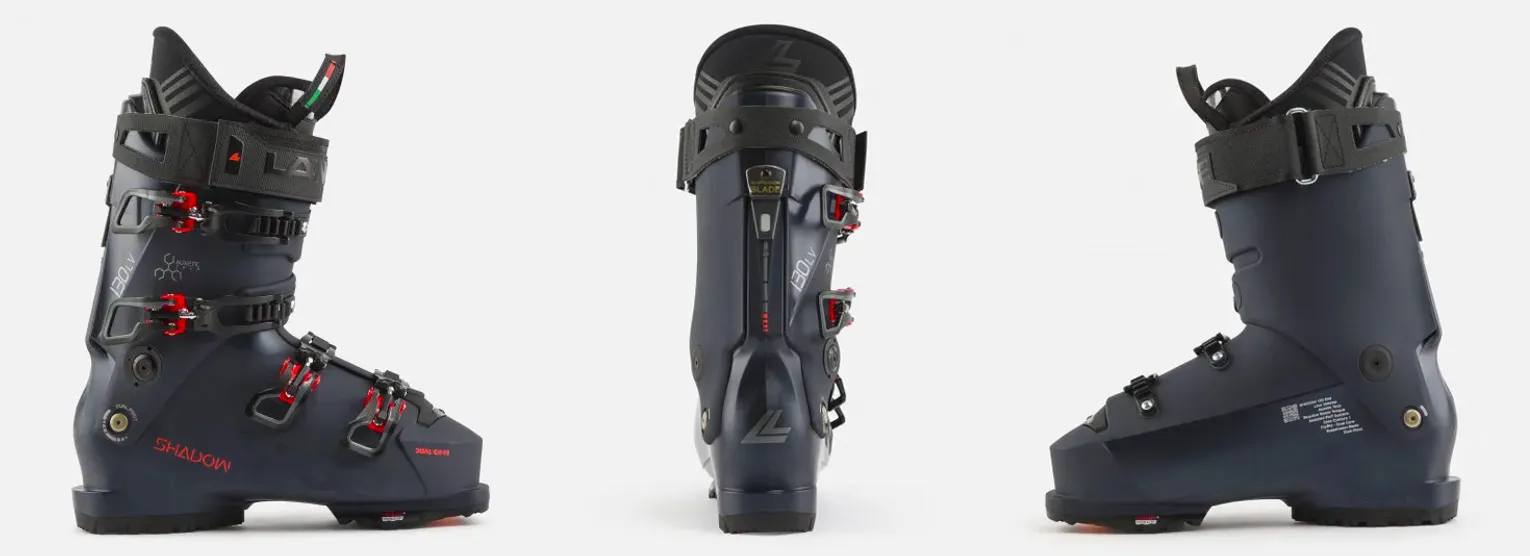
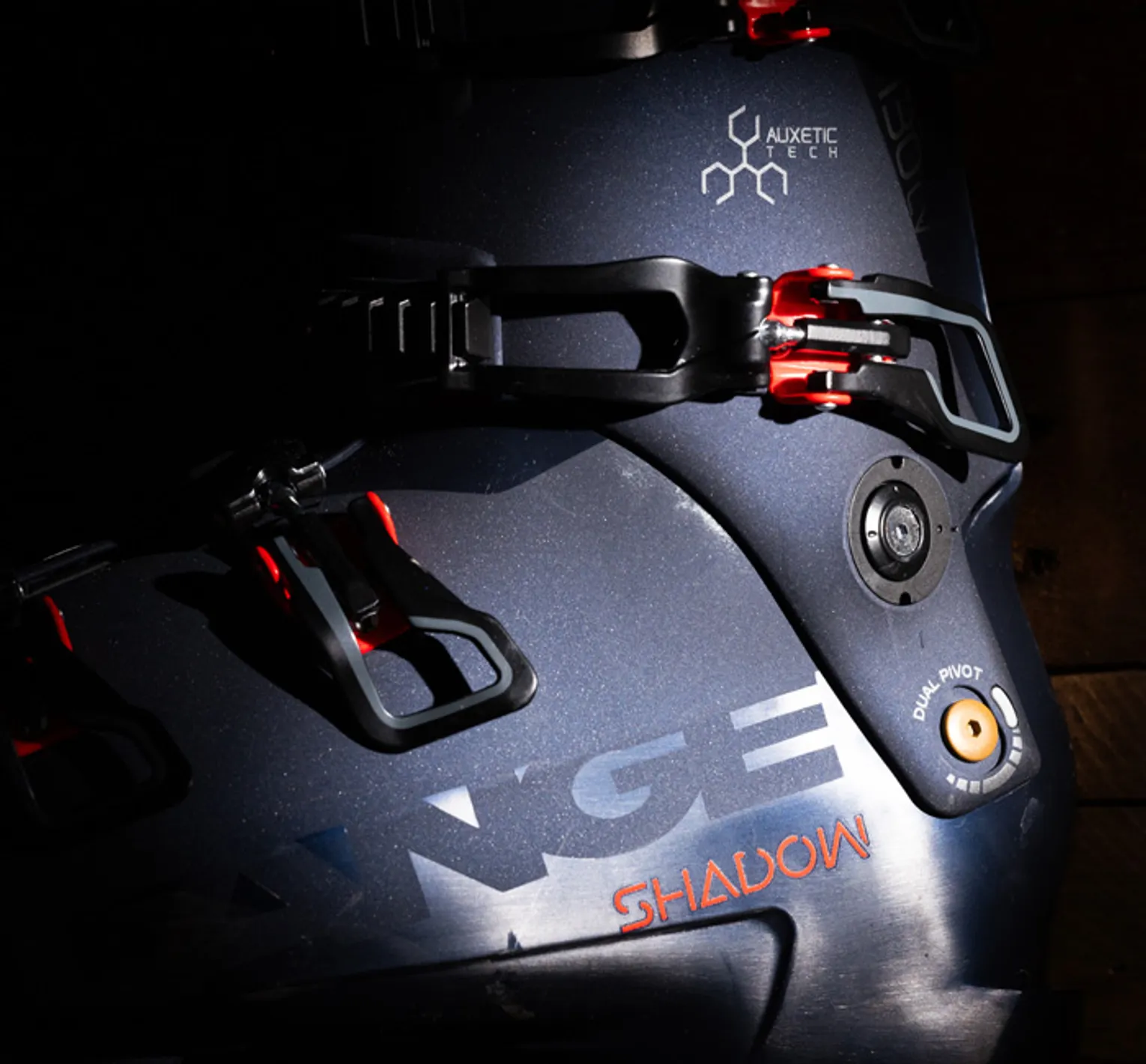
It’s interesting to talk about a cabrio boot here, as these boots have relied on a lower pivot point than the normal ankle joint points of a four-buckle boot. This has allowed them to open up more space in the front of the lower shell where the tongue piece sits. The plastic tongue, when buckled down, takes most of the forward flex in this scenario, creating a smooth and unhinged feeling from the shin to the foot. This is the reason that many skiers like cabrio boots—they have a smooth transfer of power. At the same time, it’s just a lot of plastic, and that can be a turn off for a lot of skiers. There’s a bulky shell and cuff that have to be answered for, so what you’re getting in flex comfort, you’re kind of losing in heft. Shadow basically takes the flexible tongue concept and switches it around to the back of the boot. They call it their “Suspension Blade,” and it works hand in hand with the lower pivot points on the boot to create that desired smooth feel with a ton of mechanical power, all the while keeping the advantages of a four-buckle, two-piece overlap boot fully intact. From an engineering standpoint, the new Shadow borrows from both concepts to create something totally new. The Suspension Blade, which sits in the shell, integrates into a channel in the upper cuff without traditional screws or rivets, allowing for more of a free-floating character. In the upper attachment, Lange uses a series of elastomer connections to alter the flex of the boot. You get two sets with the boots—one softer and one firmer—you can adjust the flex about 10% as you see fit by swapping out these parts. At the same time, the lower pivot points stiffen this process by keeping it all cohesive and engaging. While we’re not engineers, it does seem to make sense from a leverage standpoint. You’re getting better leverage and power with less effort, and that’s the whole concept here.
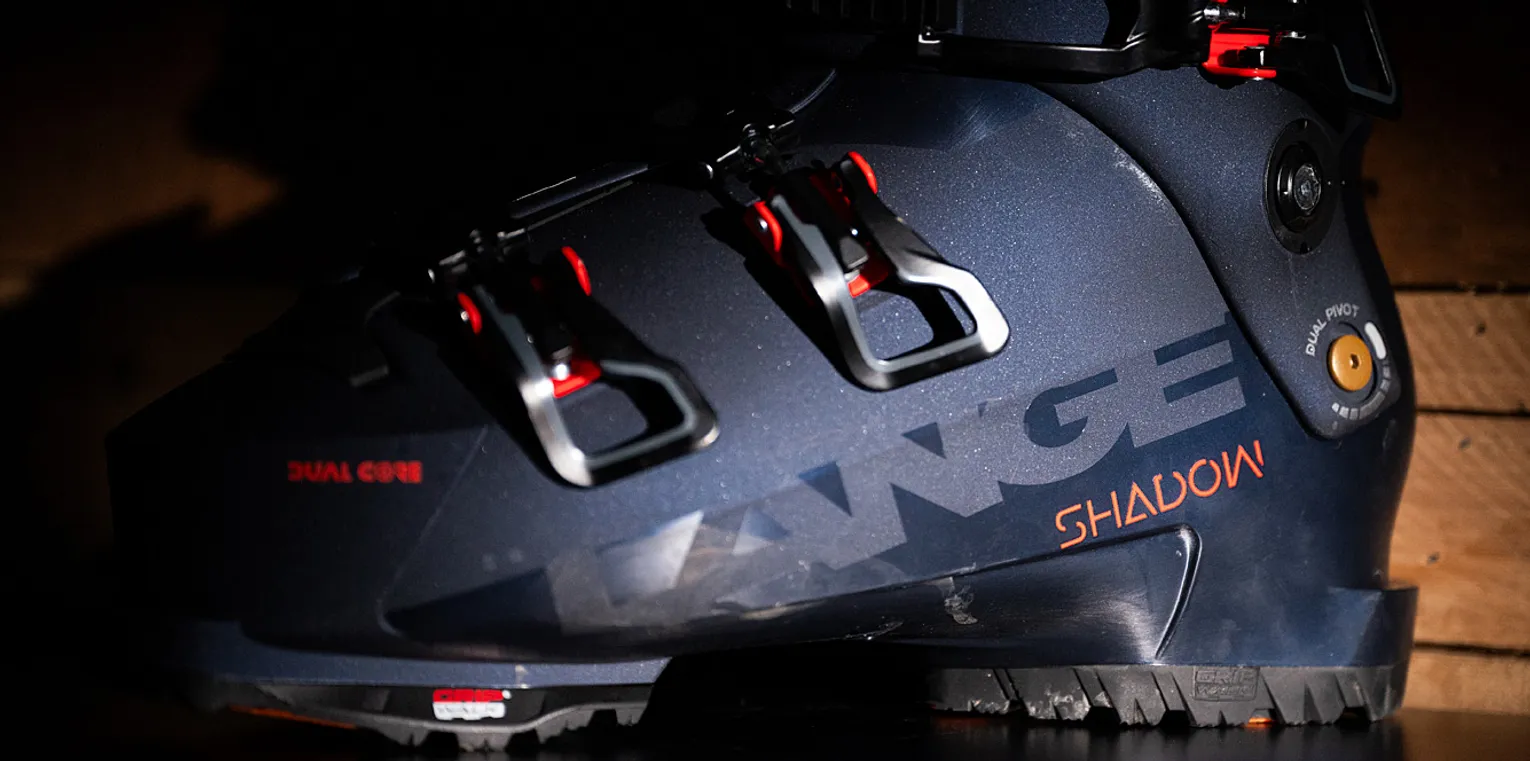
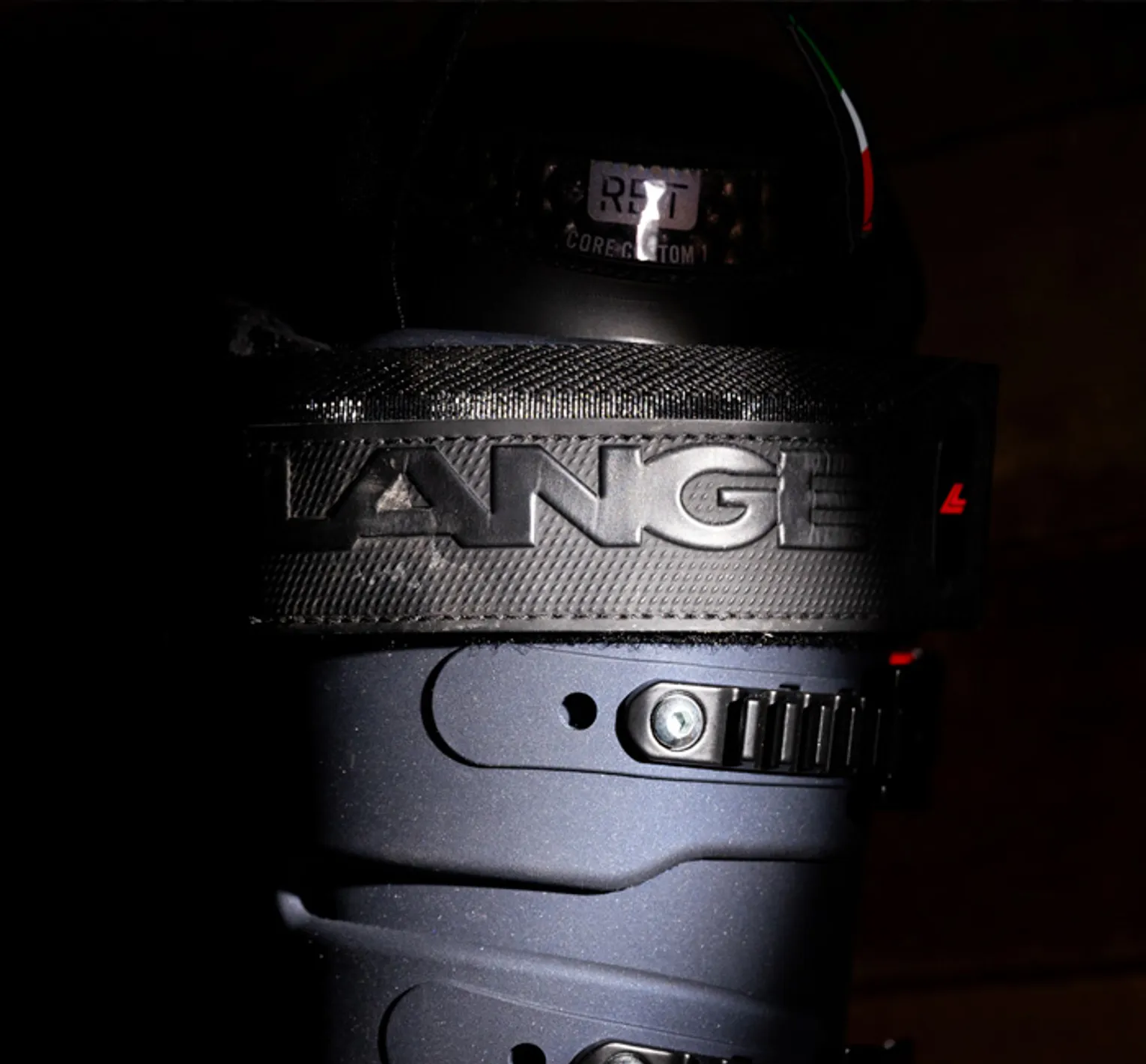
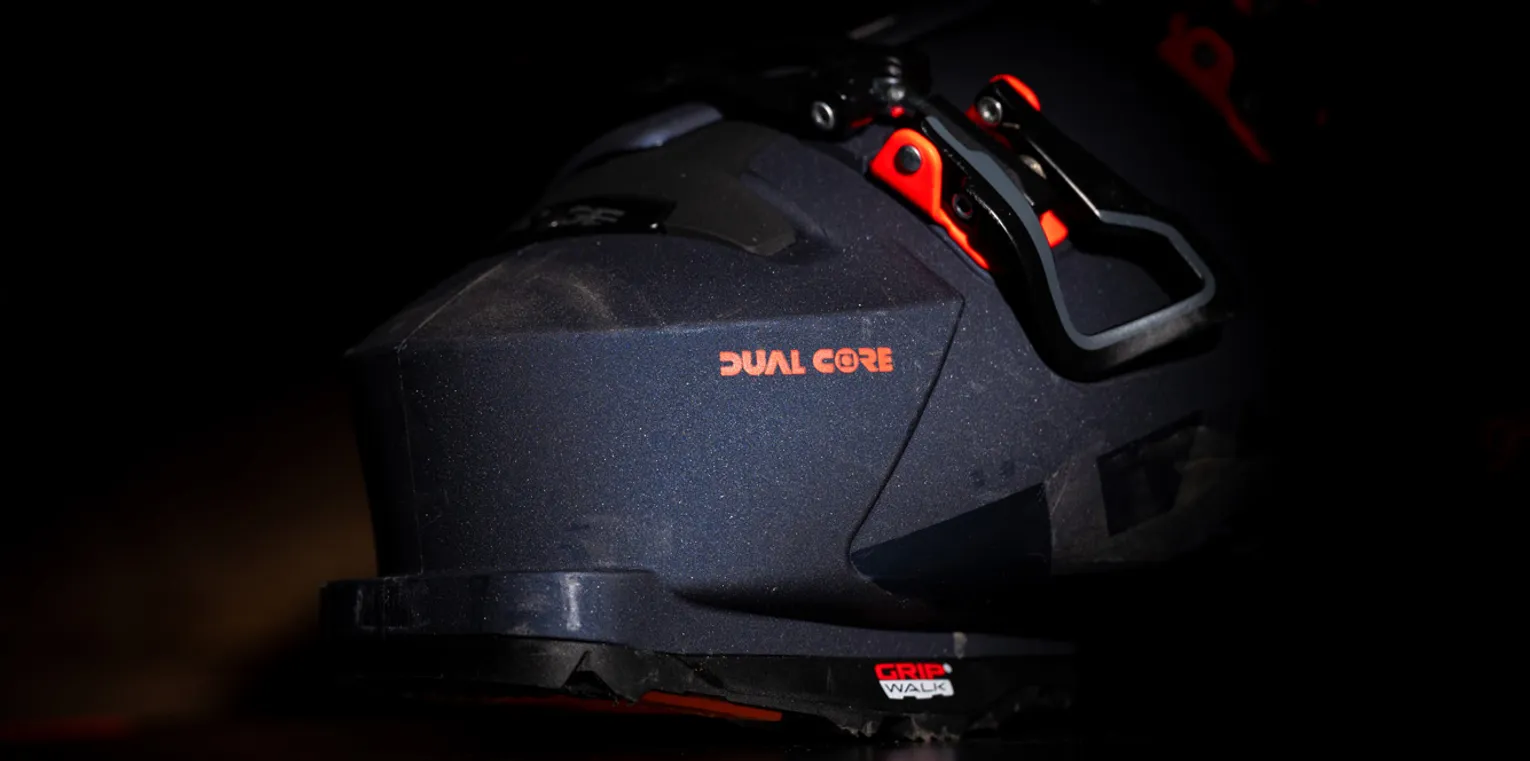
From a nuts-and-bolts perspective, the Shadow, and specifically the 130 LV for this review, is built with a Dual-Core Polyurethane shell and cuff. They’re able to put in multiple injections of PU where it’s needed (or not) to create the desired effect. Basically, this is a real ski boot, and that should not be shocking for anyone who’s skied a high-end Lange in the past. We get 4 micro-adjustable buckles (more on the usability of these later), a 45-mm velcro power strap (more on this later), and standard GripWalk soles. You can get alpine soles aftermarket. The low volume that we have features a 97 mm forefoot last while the MV is 100. Relatively standard stance numbers apply here, with a 4-degree ramp and 12-degree forward lean angle to keep you relatively upright. You can add 4 degrees to the lean with the available spoiler. The normal ankle pivot points feature a cuff adjustment so you can customize the lateral angle of the cuff as needed. The little extras are interesting, as you do get the softer elastomer pieces that you can change out with the firmer ones that come in the boot at the top of the Suspension Blade and on the sides of the lower pivot points. The liner is a big change here as well, and it opposes the more overstuffed and stiffer liners of the RS line quite well. Lange calls it their “Auxetic Tech” liner that uses more advanced shaping of the foam in geometric structures. This allows the foam to contour a three-dimensional object, like your ankle, with better precision and more comfort. It uses one piece of foam throughout, and the liner also uses more strategic stitching to avoid normal trouble spots. With an internal upper spoiler and plastic tongue, there’s performance built into the liner as well. Overall, the build and quality are representative of what we expect from Lange and their long-storied tradition of boot making excellence. But the bigger questions, to be sure, are: How do they fit and how do they ski?
At a Glance:
2024 Lange Shadow 130 Ski Boots
| FLEX INDEX | LAST WIDTH | POWER STRAP | WEIGHT | PRICE |
|---|---|---|---|---|
| 130 | 97 LV / 100 MV | 45 mm | 2,000 g @ 26.5 | $849.95 |
Bob’s Experience:
First and foremost, we need to start with a disclaimer regarding fit and performance. What my experience is will not be yours. This is always a path you must walk yourself. Go to a boot fitter. Get sized properly. Buy the boot that fits your foot and skill level.
That said, I was incredibly impressed with the fit of the 130 LV in the 27.5, as I generally have had issues fitting into a Lange LV in the past. Last year, and into this year, I use a Lange RS 130 MV at 100 mm in the forefoot, and the Shadow 130 LV fits similar to that—that is, there seems to be more room over the instep and in the forefoot than the RS MV. I normally have instep issues, and the Shadow gave me none of that. I did need to bump out the forefoot along the medial side to accommodate bunion issues, but I do that for any boot. Overall, the liner feels great out of the box, and while it’s heat-moldable, there’s no real need unless you really want to. I got new footbeds, plopped them in, and off I went—no modifications at all, and for an LV Lange, that’s pretty much unheard of. It may be seen, from those who are expecting RS-like fit, that Shadow is looser and more flexible, but this is no RS, and skiers should be aware of such things. The instep and heel pocket are where I noticed the biggest difference between Shadow and RS, so if you’re expecting that true locked-in feel from an overstuffed liner both in the ankle and instep, the Shadow is more accommodating than that. I feel that this is a better boot for more skiers, and that’s kind of a market that has eluded Lange over the years, as they’ve primarily been focused on the elite and narrow. Not that this boot is wide, it is not, but it certainly has a different feel than RS or other competitive LV boots like Tecnica Mach 1 or Nordica Pro Machine. Personally, I like it a lot.
On snow, the engineering updates of this boot play a much larger role than I thought they would. Shadow does not feel or ski like an RS 130 on the hill. Whether you like it or not is up to you, but I’ve found that there’s a pretty alarming difference in how the Shadow skis versus virtually any other alpine boot out there. The input is very direct and the rearward support is exact. You don’t realize what rear support is until you ski the Shadow. Do not get in the back seat in these boots unless you want your skis to instantly shoot out from under you—the precision of energy transfer, whether fore or aft, is extraordinary. Even when compared to the RS, the Shadow transmits power so easily and quickly, and that’s the basic premise: more performance, less effort. Say whatever you want about Shadow, this much is true. On the groomers, it takes a flick of the ankle to get the boot to initiate. While it doesn’t have the raw power of some other boots, it does take a minimum amount of effort to get the ski on edge. If you have a habit of driving forward very aggressively, you can back it off a bit and just let the leverage of the boot do its job. This is not as intuitive as I had hoped, rather it took a few days to figure out the best balance point. Since I have a very high center of gravity, this process was a bit more difficult for me than maybe some more evenly weighted skiers. In softer snow, the Shadow skis great. It’s very reactive and smooth—the rear spine does a great job at absorbing chatter and keeping everything cohesive and confident. The stiffness in the rear of the boot is noticeable here as well, with the Shadow letting you know if you’ve gotten back just the slightest. Stay balanced, and you’re rewarded with much better snow feel and performance. I actually really like these boots in the bumps—they flow with the terrain better than I thought they would, especially given my experience in other zones on the hill. The lighter weight has a lot to do with that, as these boots shave about 200 grams per boot off of the RX 130 that it’s replacing. To reiterate, these are not race boots. Do not expect that constant and consistent flex forward in the tongue of the boot. Once you get past a certain point in the flex, it starts to lose part of its charm. Be aware of this limitation, stay in the sweet spot, and you’ll see the extraordinary benefits of this new design.
I the construction section, I had mentioned a few things that I’d kind of like to see changed or addressed on this boot, as it is a premium product. With a price tag of $850, I’d like to see a better power strap. Most of the premium boots on the wall these days have some sort of booster-like power strap with a cam like a ratchet strap. It’s a nitpick, but I’d still think these premium boots deserve it. In addition, we get one toe loop and no heel loop on the liner. While these will likely rip off at some point during the boot’s life, it’s nice to have two loops to start. As for the buckles, the open-clasp design doesn’t really do it for me. I understand the slight weight savings here, but my fingers get caught in the holes when I’m trying to buckle, and I don’t like it. Additionally, the swapping of flex adjusters isn’t terribly simple to do at home. Mechanically inclined people shouldn’t have a hard time, but it’s definitely not as easy as just replacing a screw rivet with a plug. For a lot of skiers, this may require a trip to the shop, for better or worse. These are small issues. Overall, this is an amazing new boot that has taken a giant leap when it comes to design and engineering. They ski great and fit even better.
Jeff’s Experience:
Testing boots can be an interesting experience. Once you find a boot that works well for you as a skier, it’s hard to change. It becomes an emotional and personal connection to your body. For me, that boot has been the Nordica Speedmachine 130. After 3-4 rather excruciating years trying to ski a Pro Machine 130, I finally succumbed to the idea that I don’t need a super low volume boot and found a comfortable home in the Speedmachine. So, with that knowledge, you can probably understand my relative reluctance to try something new. Alas, here we are, and this is a place I’m happy to be. Has the Shadow replaced my fondness for the Speedmachine? No, I don’t think we can go that far. Have a found a new boot, however, with which I can establish a similar level of connection, albeit a different style? Yes, I think I have.
Starting with fit, the Shadow 130 LV is a generous low volume. For a boot that claims a 97 mm last, it’s quite accommodating. Considering on paper my Pro Machine was 98 mm, I was surprised to find how easily I fit in this boot. I give credit to the liner, as it does feel like it conforms very well to your foot and ankle, rather than just packing out. I also give a lot of credit to how it fits over your instep. It’s not as crushing as some boots can be, which allows your foot to relax a little bit more. I was a bit worried about nevicular pressure and pain at first, but that went away completely after about 4 days of skiing in the boot. I personally love the heel hold, although I’ve read reports from others that didn’t find it as impressive. To those skiers, I’d say spend a little more time working yourself into the heel pocket and ensuring that you stay there. A handful of days like that, and I would venture a guess that you’ll find similar suction-cup-level heel hold. Seriously, they’re hard to take off sometimes because my heel is literally stuck in the heel pocket. That’s a problem I’m happy to have. So, fits great, but how does it ski?
At first, I skied it right out of the box with the denser gray plastic pieces in all the pivot points and in the spine. I had GripWalk soles on too (I despise GripWalk soles, but let’s leave that for another day). That first day, I couldn’t get them off my feet. I’m used to really working hard to flex a stiff boot and I have more ankle flexion than most people. With the Shadow, the power transfer is so efficient, it felt twitchy and weird to me. I couldn’t figure out how to ski it. My skis were reacting to input I didn’t even realize I was providing, and it left me feeling uncomfortable and frankly a bit confused.
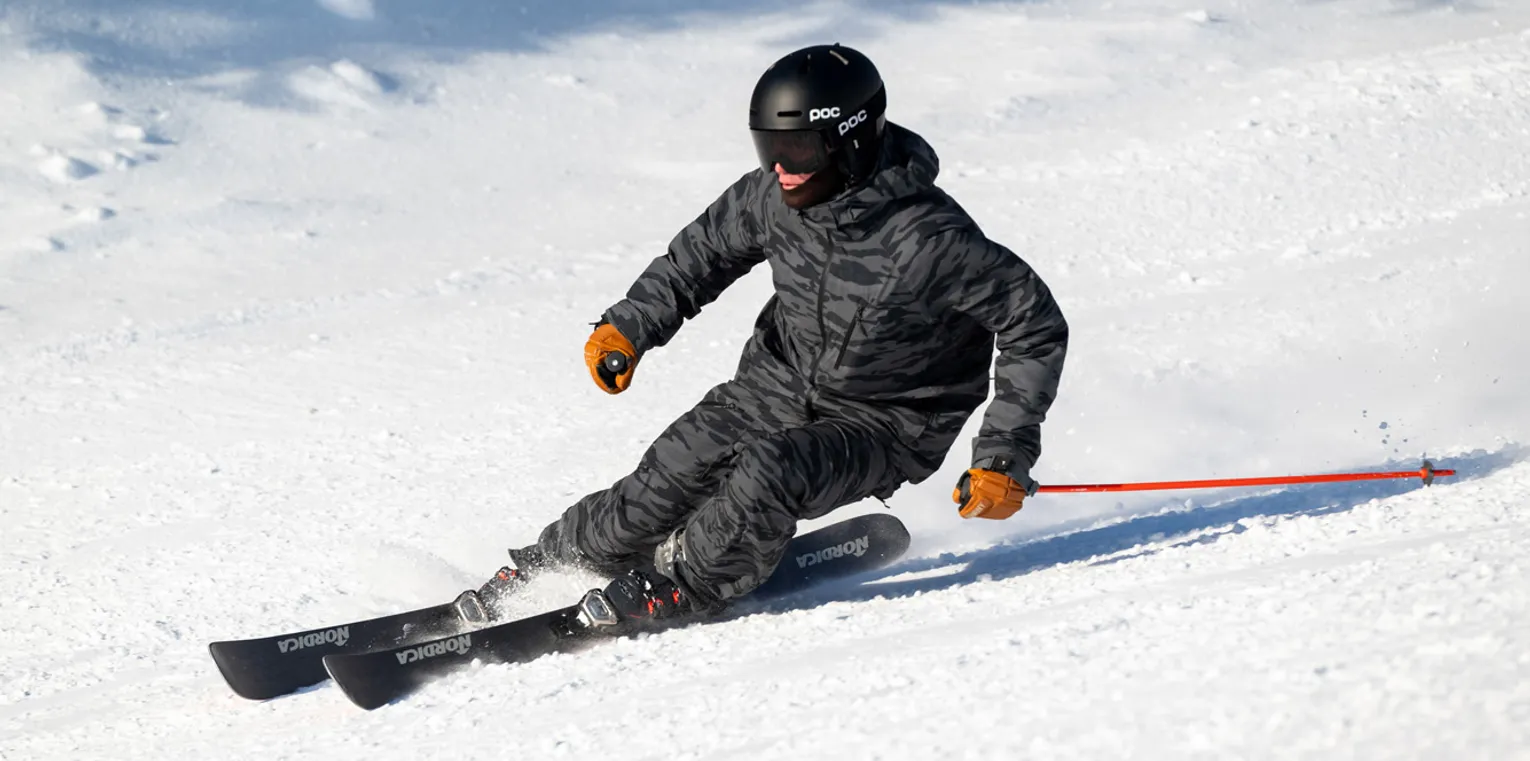
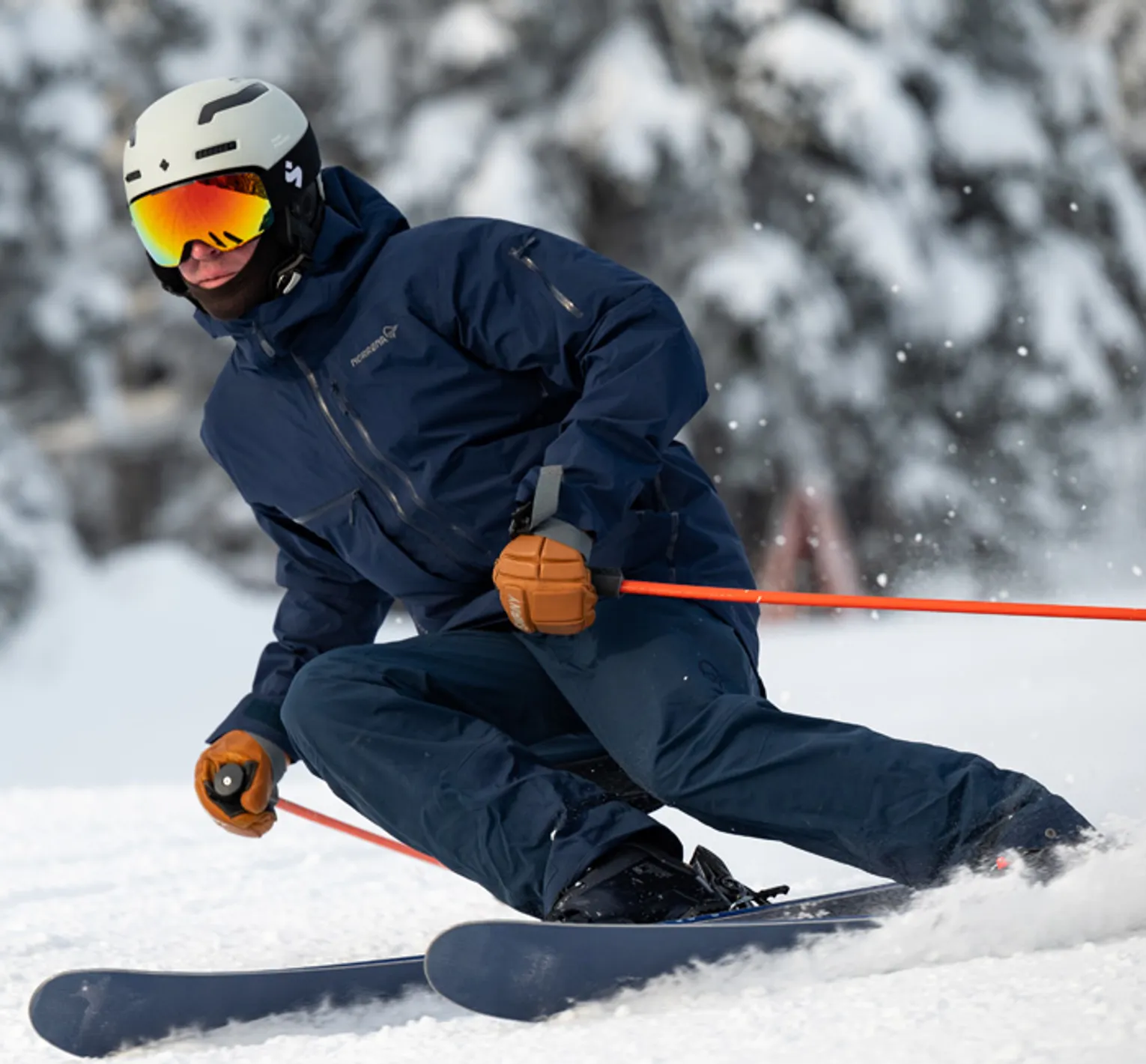
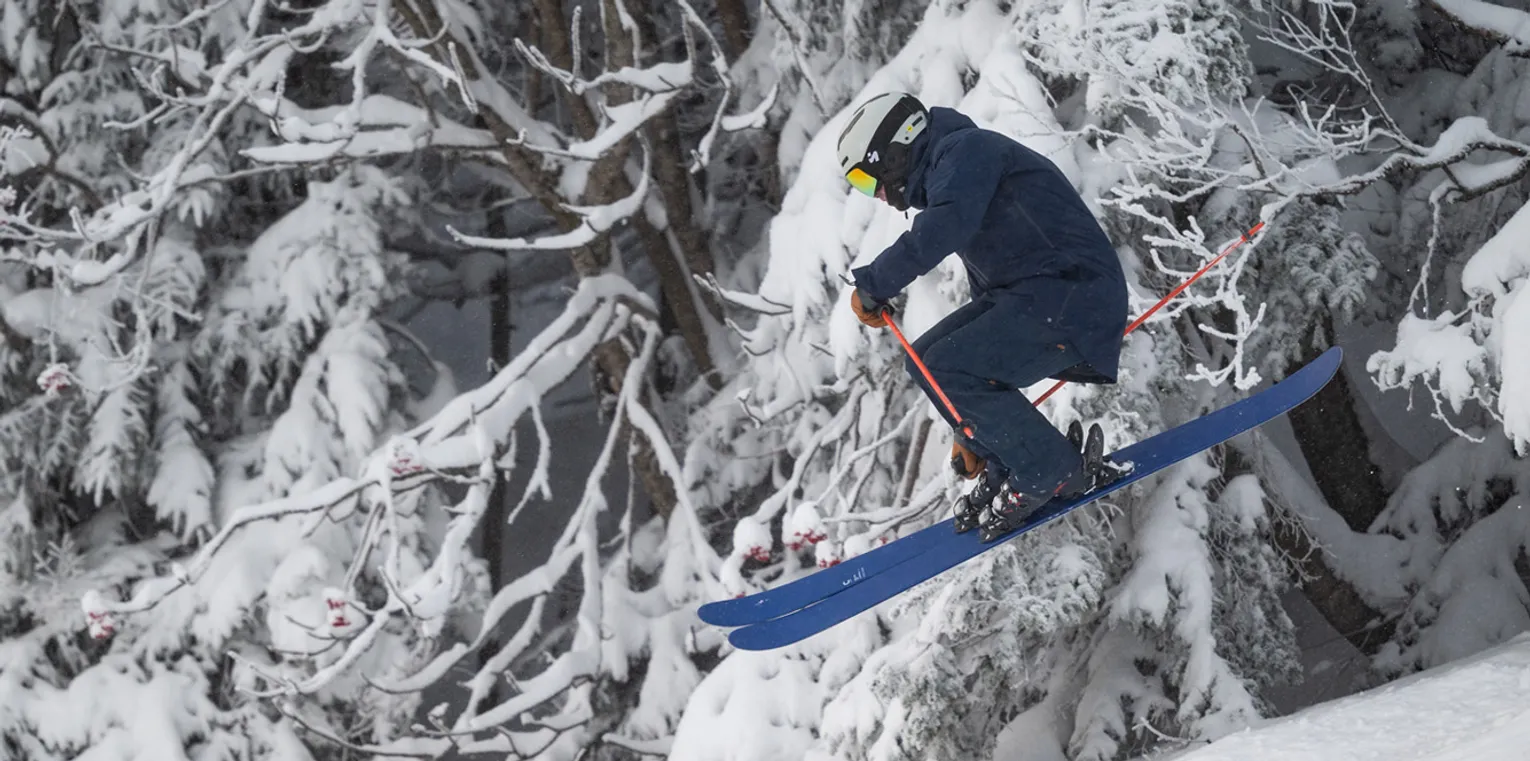
Then I went to work. GripWalk soles in the trash, that’s step one (calm down, I donated them to our boot shop). Then I went about swapping all the gray plastic pieces for the softer black rubber pieces. All of a sudden, the boot felt less twitchy. I felt more comfortable just switching to the DIN soles alone, but swapping to those black rubber pieces gave the boot more suppleness. That was when it really started to come alive for me. I could more comfortable achieve a level of ankle flexion that made me comfortable, and yes, I think swapping to the rubber pieces reduces the efficiency of the power transfer, but with my skiing style, that’s exactly what I needed. With that setup, it’s a pleasure for me to ski in. Easy fit, comfortable, warm, pretty lightweight, and skis great. I feel like I’m in total control, but I also feel like I can retain the level of playfulness and creativity that I like about my skiing.
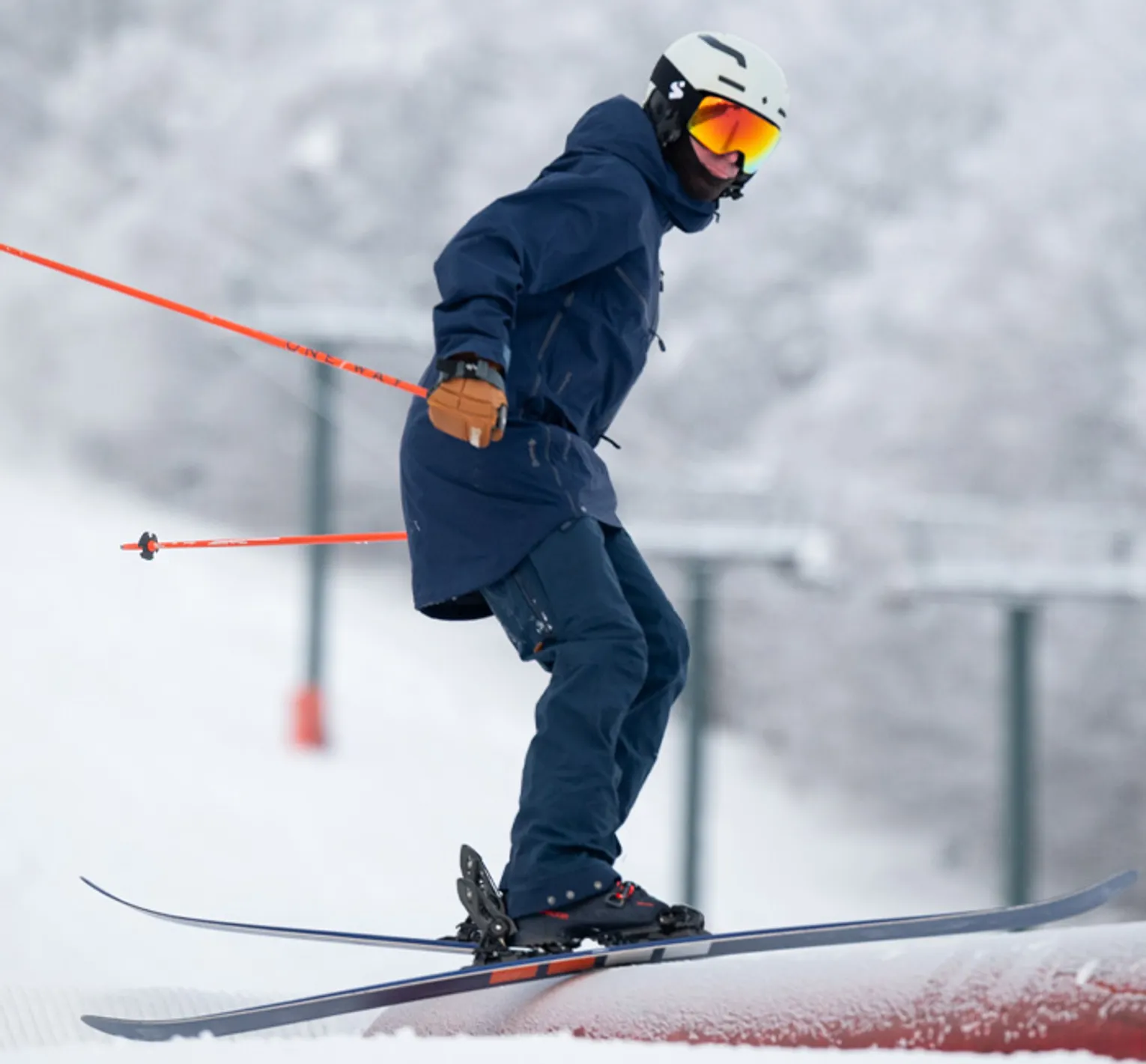
I like it carving, I like it bopping around in off-piste terrain, and not surprisingly (this was something I was excited about), I like it in the park. The 12 degrees of forward lean is more upright than some, which puts you in a great body position for the park. Also, that efficient power transfer and level of control the boot provides gives you quick responsiveness, which is necessary when doing things like switch ups on rails or other techy park tricks. Super fun. Probably my second favorite park boot among the boots I own, just behind a K2 FL3X Revolver Pro.
In my opinion, the Shadow 130 LV accomplishes what it set out to do. It has given the skier a mechanical advantage over single pivot overlap boots. As has been talked about across the industry at this point, it’s like a teching tool or performance enhancer for an intermediate skier. If you want to improve your carving, it’s hard to argue against the Shadow. That said, it’s not for everyone, and there will be times this season when it’s not for me either. If you want to ski fast, aggressively, and maybe a bit reckless, you’re better off in a stiffer, more traditional boot, in my opinion. For me personally, if I’m looking to ski hard, I’ll likely opt for my Speedmachines or a similar boot. On the other hand, I certainly don’t ski super hard every day, and on those days, I’ll very likely be reaching for the Shadow.