2025 Salomon QST X Ski Review
It’s taken a couple of seasons for the loss of the Salomon QST 118 to shake out, but the addition of the QST X at 116 mm underfoot is a very good reason for the pause. The QST Blank at 112 mm underfoot filled in admirably as the widest ski in Salomon’s collection, but as we recently experienced in Alta, Ut, there’s still plenty of room for wider, slightly lighter, smearier, and surfier skis at this width range. It’s safe to say that our experiences on the new QST X have been both vast and entertaining, spanning the continental United States from here in the Northern Green Mountains of Vermont to the Rocky Mountain classic of Crested Butte, and through to the top of Little Cottonwood Canyon at Alta, Utah. It’s fair to say we’ve put this ski through the wringer, and it’s come out clean on all sides. Thanks to a blend of lighter weight materials, a straighter cut, and generous rocker, this ski is as smooth and fun as it gets in anything over a few inches. It handles clean and untracked powder with ease, busts through crud with minimal issue, and bounces through trees with the greatest of ease. So far, in soft snow, we haven’t found much of a limitation with this QST X.
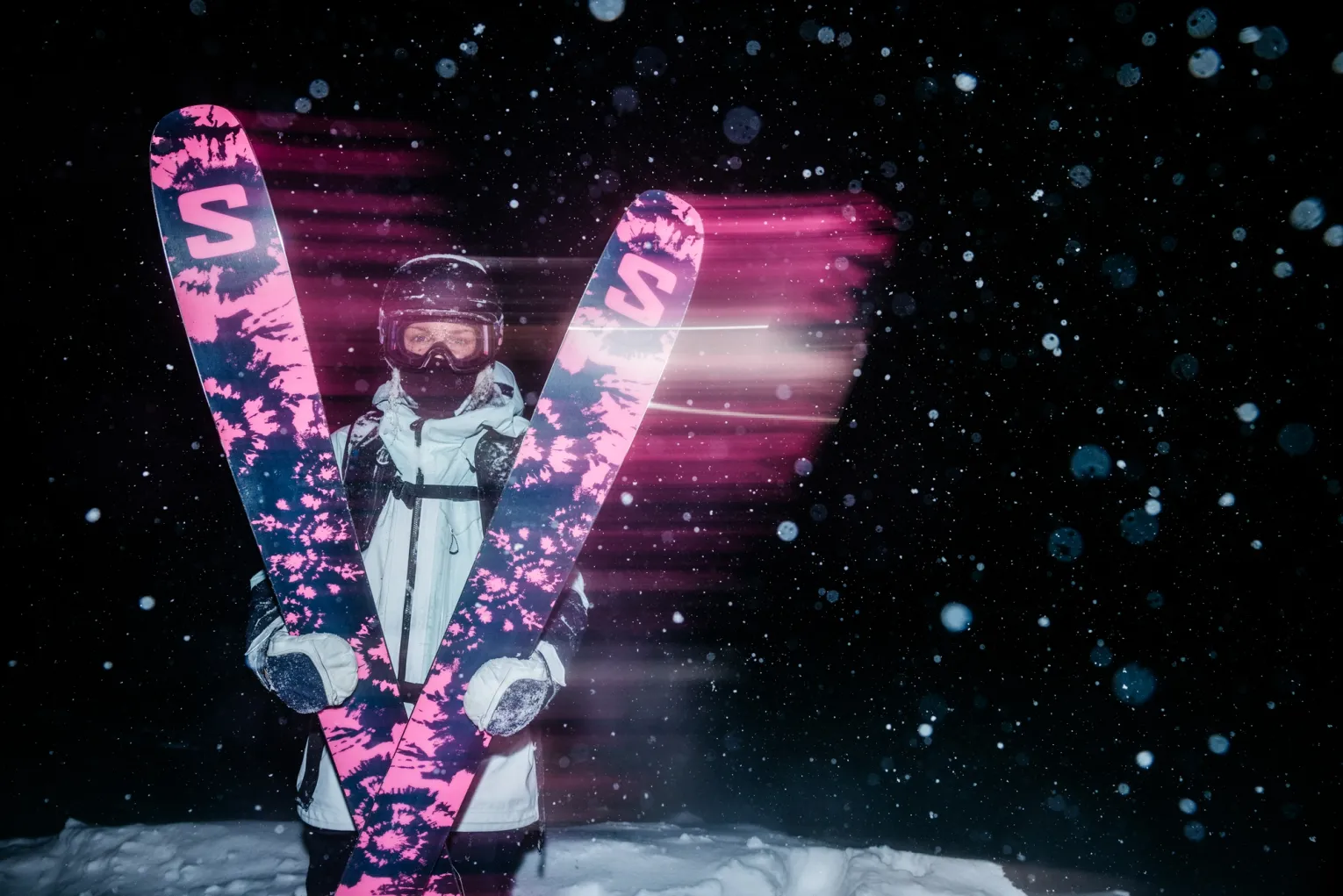
The construction of the ski follows the same path as the QST Echo 106 did last year, by incorporating a lighter core and less additives to make the ski more mobile and drifty in the softer snow, as well as adding the touring or hybrid potential. While we mainly used this ski in a resort setting, we did note that the sub-2000 gram weight of the ski is suitable for backcountry opportunities. Built with a blend of poplar and karuba, the QST X benefits from maximum pop and light weight. The poplar stands up to pretty aggressive skiing while the karuba keeps the weight down and the energy up. Salomon then adds their Carbon and Flax fiber laminate to the top of the core, and this adds a surprising amount of pop and zest to the ski as well as helping to knock down unwanted vibrations. The bigger part here, about keeping the ski still, is the addition of the cork damplifier material in the tips and tails. This is a highly absorbent material and it does a great job at keeping the ski silent and smooth. What’s amazing about the QST X, though, is that it still feels powerful and sturdy underfoot, and a lot of that is due to the double sidewalls. Instead of adding a metal sheet underfoot, there’s just more sidewall material here, boosting the strength of the ski's midbody. All of this adds up to a weight of 1900 grams per ski in the 184 cm length, which is pretty darn light given the surface area and capabilities.
At a Glance:
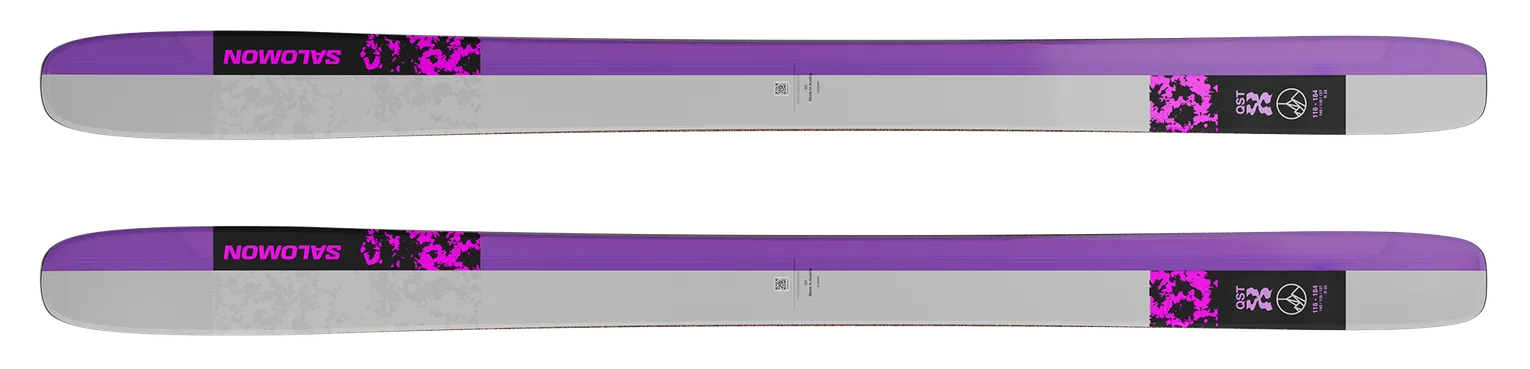
2025 Salomon QST X Skis
| AVAILABLE SIZES | TURN RADIUS | SIDECUT | WEIGHT | PRICE |
|---|---|---|---|---|
| 178, 184, 192 cm | 25 m @ 184 cm | 140/116/127 mm | 1900 g @ 184 cm | $799.95 |
From a shape and profile perspective, this is where the new QST X definitely separates itself from the Blank. While the Blank uses a more dramatic taper shape and curved profile, the X is straighter and more gently curved with a flatter overall feel. This leads to a surfier and smearier character, especially when combined with the lighter weight and more mobile personality. The length of rocker in the QST X is pretty similar in the tips and tails, with the front of the ski getting 30% of the bend and the tail getting 26%. The remaining 45ish percent of the ski is camber, but it’s pretty low, leading to the flatter overall look of the ski.There’s not a whole lot of splay here either, as the tips and tails fall on the lower side of the spectrum. This leads to that smooth and slashy blend of attributes that we found to be so incredibly fun in the powder, crud, and chop. The straighter cut leads to a lack of taper, which we see more in excess in the Blank. This does a few things for the QST X. For one, it gives it a longer turn radius. In the 184, we’re getting a 25-meter arc, which is somewhat normal for skis of this width. This gives the skier better control over the duration and style of turn, whether you’re sending it straight down a big open face or getting the thing sideways with smoothness through the tighter spaces. Skis with a shorter arc, like the Blank, can balk a bit when thrown sideways as they want to hook in and complete the turn. Same can be said in the straighter shots, as the Blank (or equivalent ski with shorter radius) will desire to start the turn while the QST X is just as happy to find the fall line and stick to it unless otherwise directed. Again, when combined with the lighter weight and more mobile nature, these aspects align spectacularly to deliver predictable and totally enjoyable powder performance.
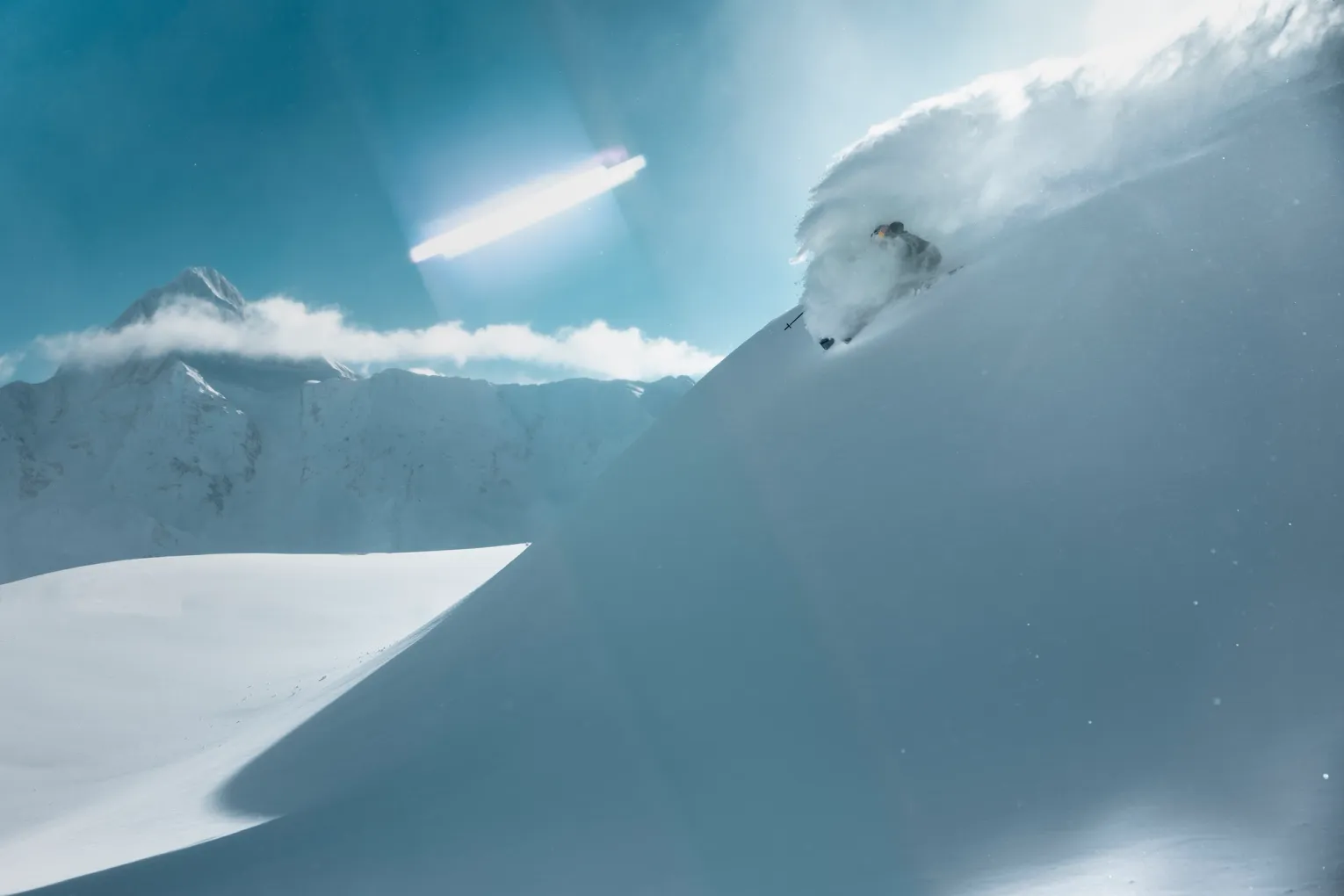
Performance is the key here, and we were lucky to have multiple experiences to draw from, and that’s not always the case with a wide freeride ski like this. We’ll break it down into three different parts with feedback from Jeff, Bob, and Matt and their individual use cases.
Bob:
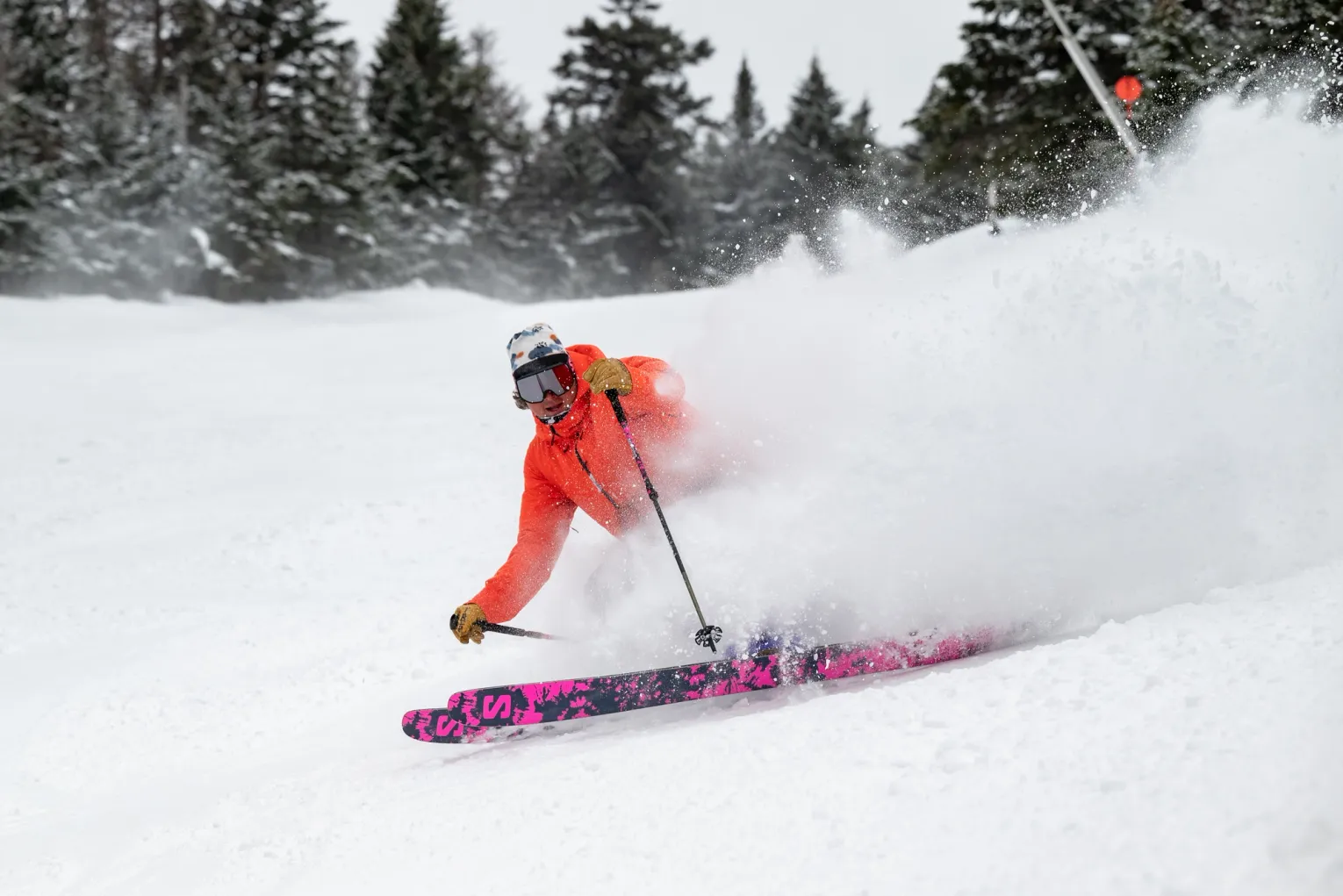
I only got to ski this in Alta, so my perception is VERY positive. For one full day, I got to experience this ski in its designed natural habitat, and it was awesome. After skiing the QST 106 and the Blank the day before, it was exciting to see what the wider and lighter versions of these skis had to offer. The first thing I noticed was that they were so incredibly easy to ski. While the 106 and the 112 featured a denser feel and more of a desire to carve/turn, the X felt a lot more at home going sideways, and in deep snow like we had, that was a very good thing. Whether it was an open zone or a tighter tree shot, the ability of the ski to pivot and smear helped out a ton, especially when I didn’t exactly know where I was going. We don’t often get this type of snow in Vermont, and when we do, we’re normally not on a ski this wide, so getting to feel and experience that slashy and smeary feeling was a top experience for sure. It all made sense as to why you see the pros and other high-level skiers throw their skis sideways so easily, and I couldn’t help but keep doing it both from a speed control perspective as well as a simple exercise in having fun and being creative. While I didn’t get a chance to ski the X on anything even remotely resembling firmer snow, that’s not really the point. This is very clearly a specific tool/toy for a given level of conditions. In this realm, it’s tough to envision a more fun, more playful, or better suited ski to deep and dry snow as well as varied terrain than the QST X.
Jeff:
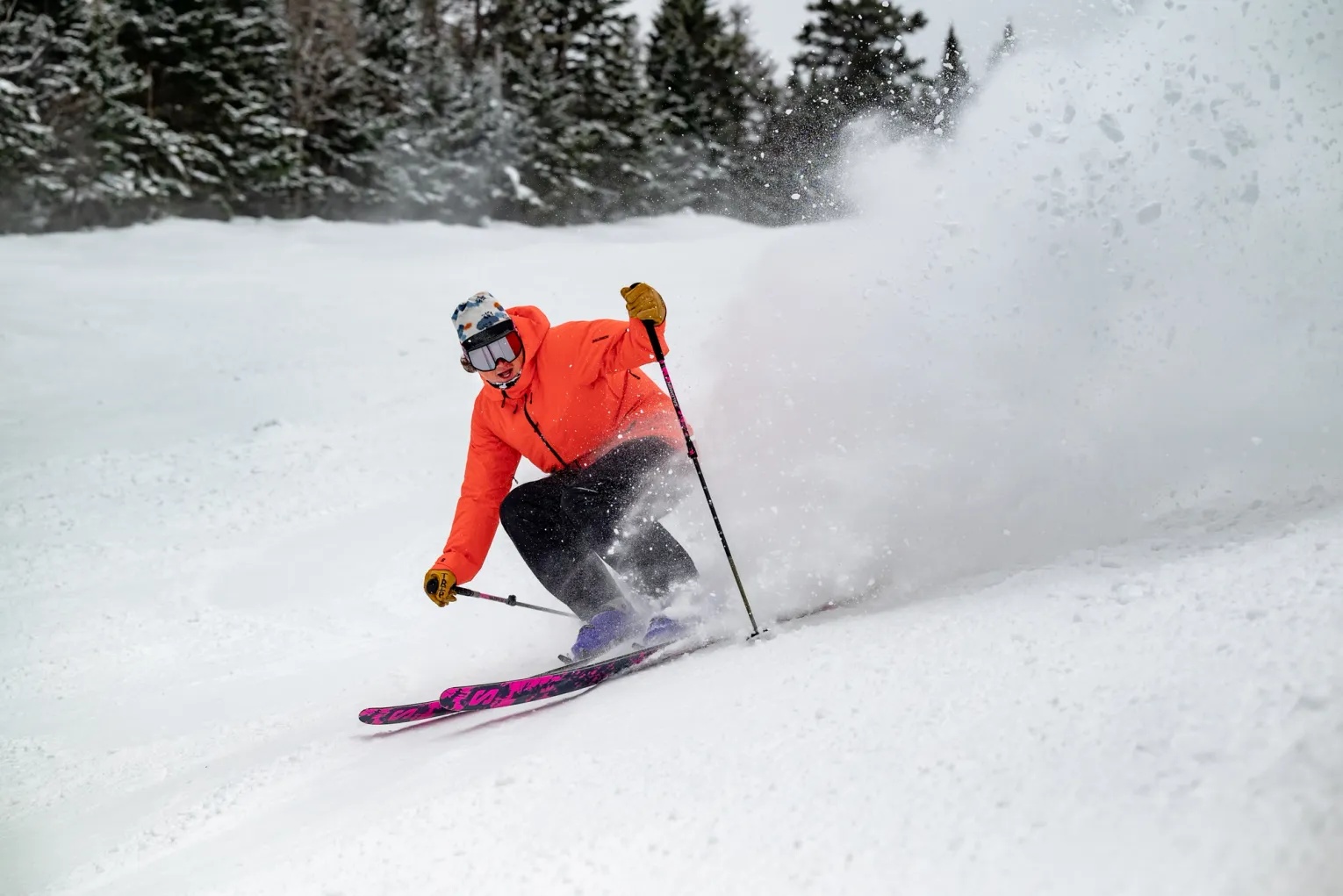
I thoroughly enjoyed putting the new QST X to the test both in Stowe and Alta. At Stowe, on my initial days on the ski, I was certainly benefitting from the supreme amount of float. Here in Vermont, even on a deep powder day, you’re almost definitely going to hit some firmer stuff underneath. A ski like the QST X minimized how much that happens, which is a nice benefit. Of course, you’re kind of walking this fine line of being wide enough to float and too wide for our tighter terrain, but I never felt like I was on a wildly inappropriate ski on the X, quite the contrary. It reminds me of my first time skiing the old QST 118. I thought it was a pretty silly ask testing that ski in Stowe. I did, however, have some tremendous runs on it in the notch where I was quite impressed by not only its float, but its agility for such a big ski. That shape is similar to the new X with its width, rocker profile, and also turn radius. The long radius and long rocker lines in the QST X makes edge release super easy, which definitely comes in handy here in Vermont as you wiggle through tight trees.
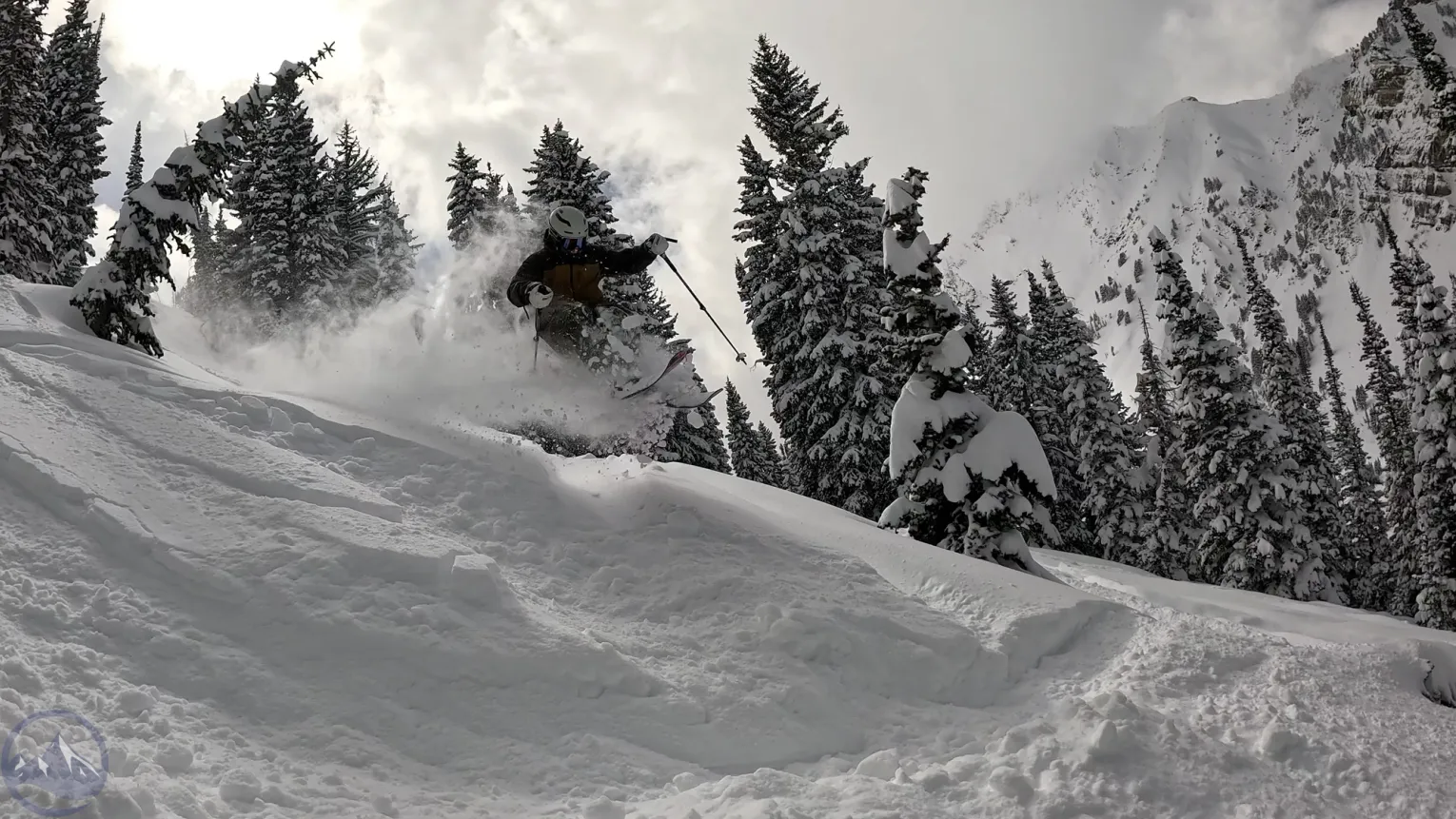
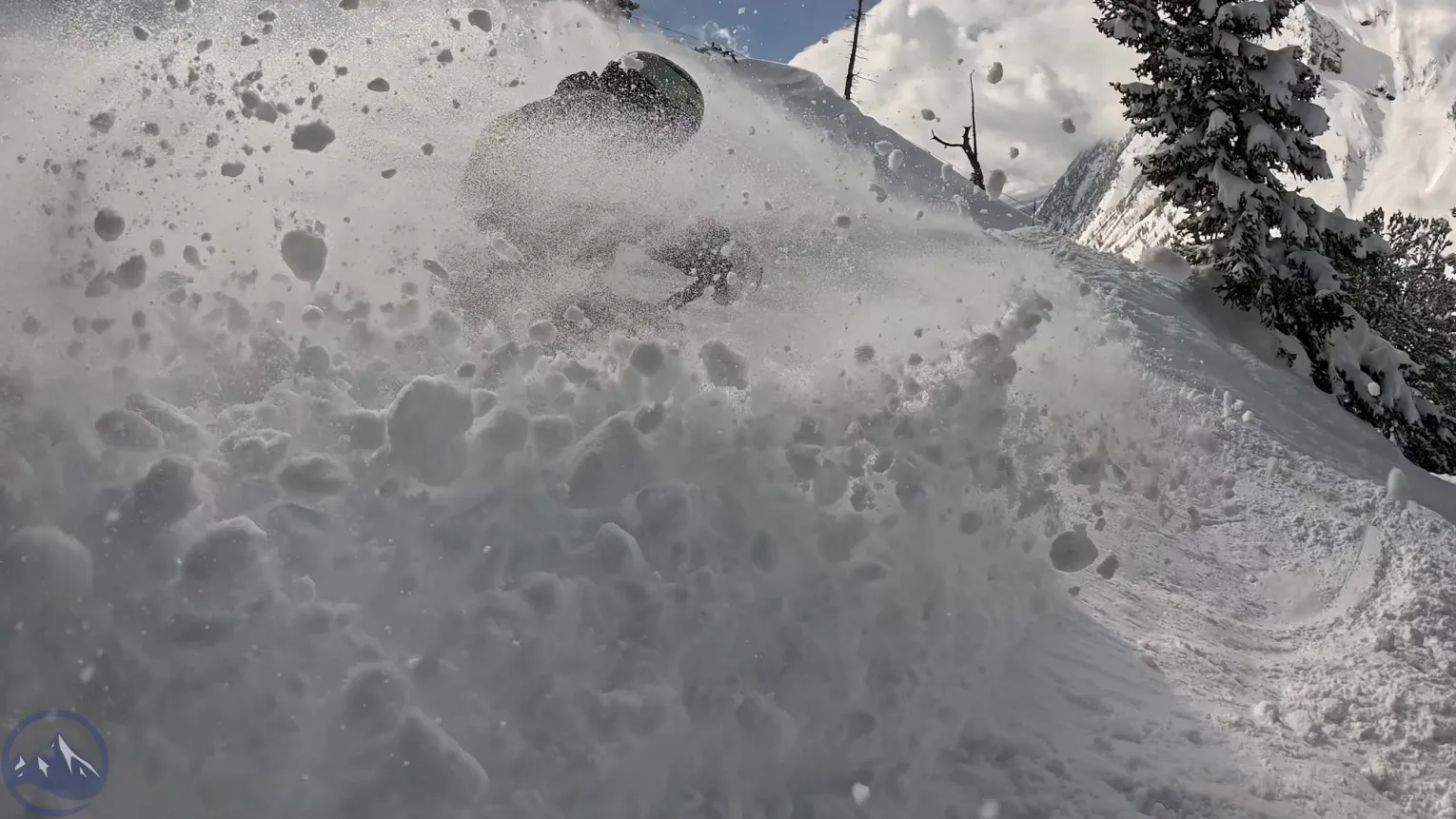
In Alta, I felt myself somewhat split between preferring the X or the Blank, and for me it came down to the specific terrain. Anywhere that was more open and allowed for more speed, I found myself preferring the more robust feel of the X. In the trees and where things got really deep, however, the X was the superior tool. Its performance in deep snow is off the charts. You definitely feel more of a surfy, floaty, drifty style when skiing the X compared to the Blank. On the Blank, I felt like I was encouraged to go really fast, take bigger airs, etc, etc. On the X, I found myself looking for pockets to slash big turns, trying to find the deepest snow on the mountain, and just skiing with a more playful and more deliberate attitude. Thinking to the touring nature of this ski, I love that characteristic. I’ve talked about that before with other skis. When you’re touring, you’re generally pretty tired when it comes time for the descent, and I think having a ski like the X which promotes more purposeful skiing, while still being perfectly capable in just about any environment, is a great attribute. I haven’t actually done much touring on it, but I would love to do more, and thankfully, Matt has done lots.
Matt:
I had the opportunity to ski the QST X in a wide variety of terrains, snow conditions, and locations that permitted a truly awesome and vivid experience. My first experience was in the Colorado backcountry, touring during fresh snow day that was very fitting for the X. After starting my ascent, I was immediately impressed by how light these 116 mm, 192 cm long, monsters were and how easy they were to tour with. Even after multiple laps, I felt like I could go on forever, which isn’t always the case with powder skis of this size. Kick turns? No problem. Grip on wind affected patches of snow? No problem, regardless of the heavily exaggerated tip and tail rocker. These things just wanted to keep going and never gave an excuse to stop. Now onto the good stuff... powder. As Bob mentioned before, the X sets itself apart from the rest of the QST line in that it really likes to be thrown sideways, slashing and smearing through the snow in ways that I have always dreamed of. But that’s not to say that they can’t charge down the fall line, because they certainly can and feel just as at home as the creative, surfy, side of their personality. The ability for the X to straight-line at speed and then immediately go sideways to dump speed or get a face shot, THAT is what they like to do. I had also spent a bunch of time in a resort setting at both Crested Butte and Stowe. While at Crested Butte, the conditions were not necessarily what I would describe as QST X-like conditions with 40-degree temperatures and no new snow for about a week. The snow was chalky, slushy, and the trails were full of moguls. That’s where I found the X’s to not have the stability, chargeability, or carve-ability that was needed to bust through moguls and carve on trail. I happened to bring my QST 106’s on this trip as well and skiing the X back-to-back with the 106, the Echo construction of the X became very apparent in both an off and on-trail format.
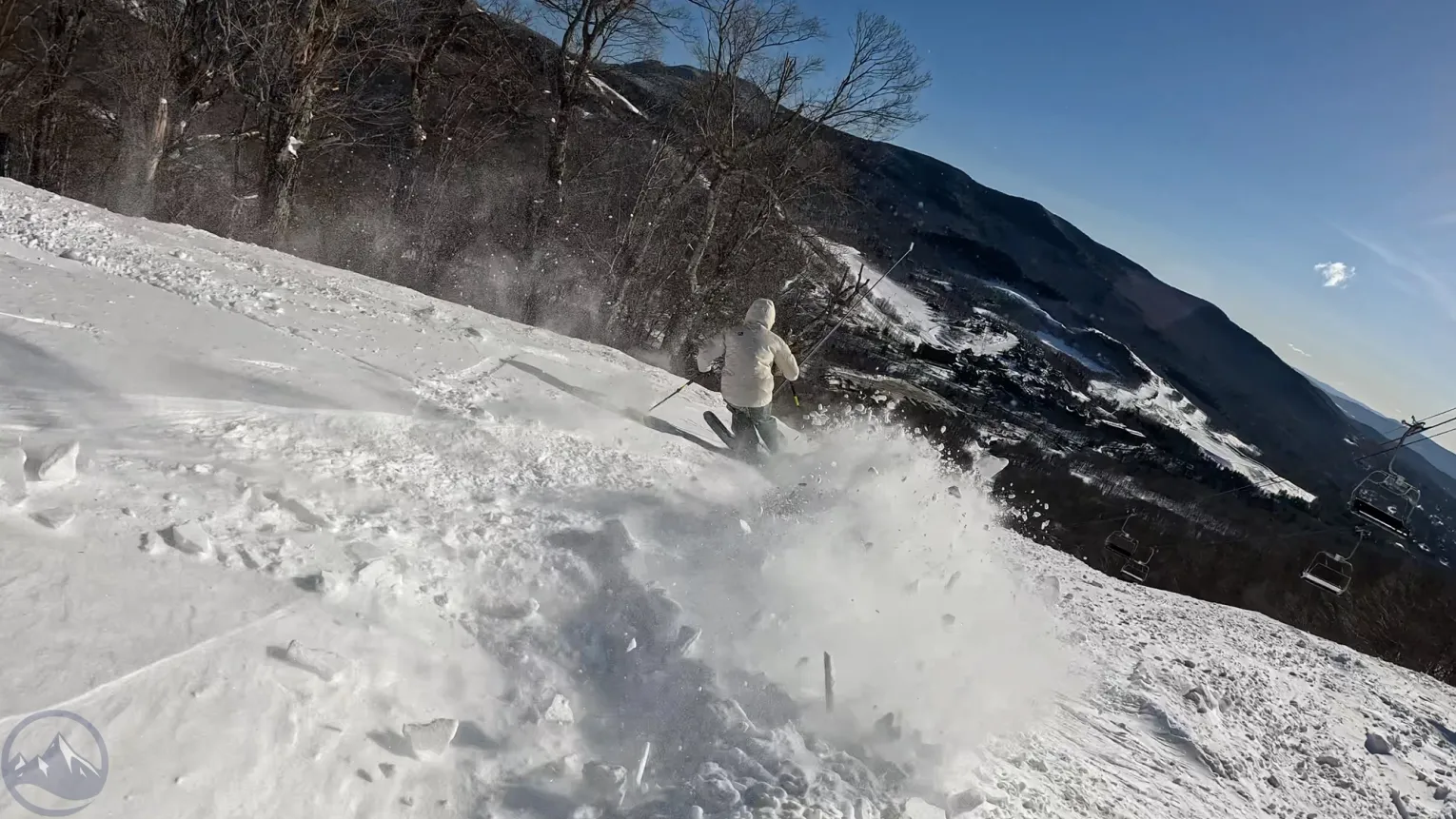
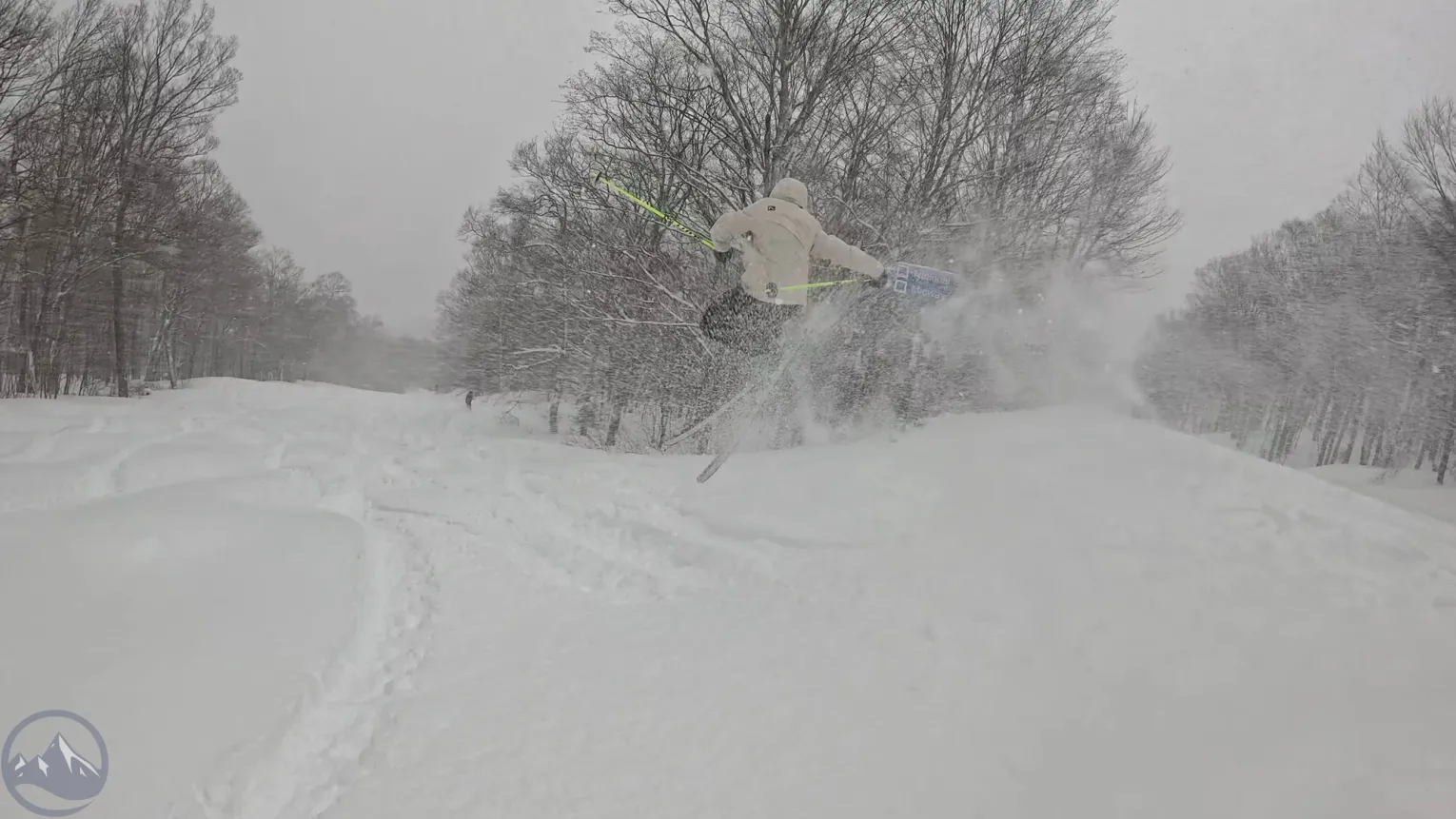
The X, in my mind, is truly a fresh, soft snow ski due to its surfy and smeary character. When on firm snow or groomers, you really had to work hard to get them to engage due to the lack of sidecut and 26 meter radius. As a testament to its surfy, turn-on-a-dime nature, I found the X in the 192 cm length to not be an issue at all in the Stowe backcountry and sidecountry. Being 6’2” and 200 lbs, I thought that the 192 cm length would likely be the right size for my style and preferences especially since it has the lighter weight, Echo construction. The tight Northeastern trees were no issue with how easy these skis are to pivot and change direction quickly. This became quickly evident when dropping cliffs and having to control speed soon after impact. I have to give it to the Echo construction because it is surprisingly stable under these conditions of higher speed and higher impacts, specifically in soft snow. They are soft enough to lessen the impact, but also strong enough to not buckle under the pressure. Also, there is a lot of energy and bounciness to them that is a total blast when popping off of jumps, sidehits, or just making turns in really deep snow. Overall, the QST X is a powder specific ski that is intended for creative minds that have a surfy, slashy style of expressing themselves both in the resort, sidecountry, and deep in the backcountry.